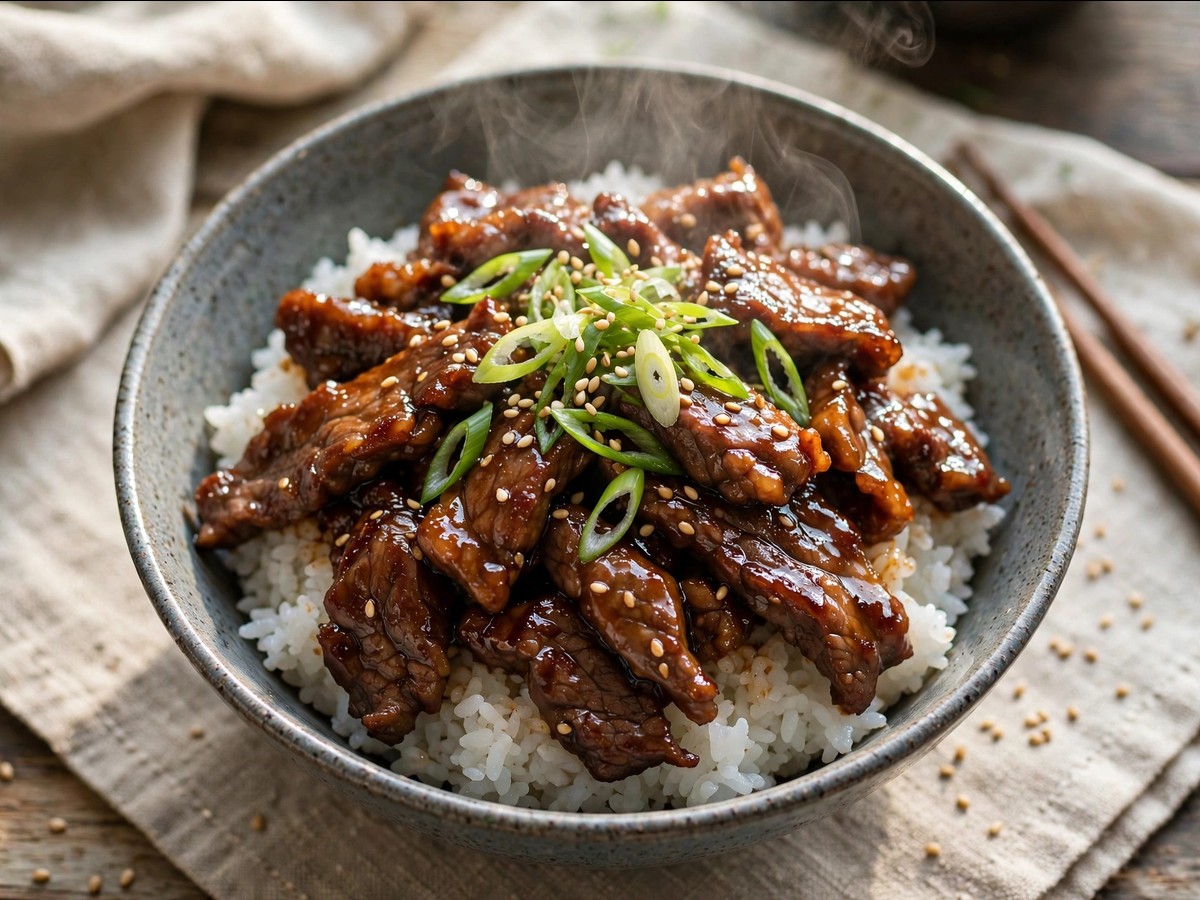
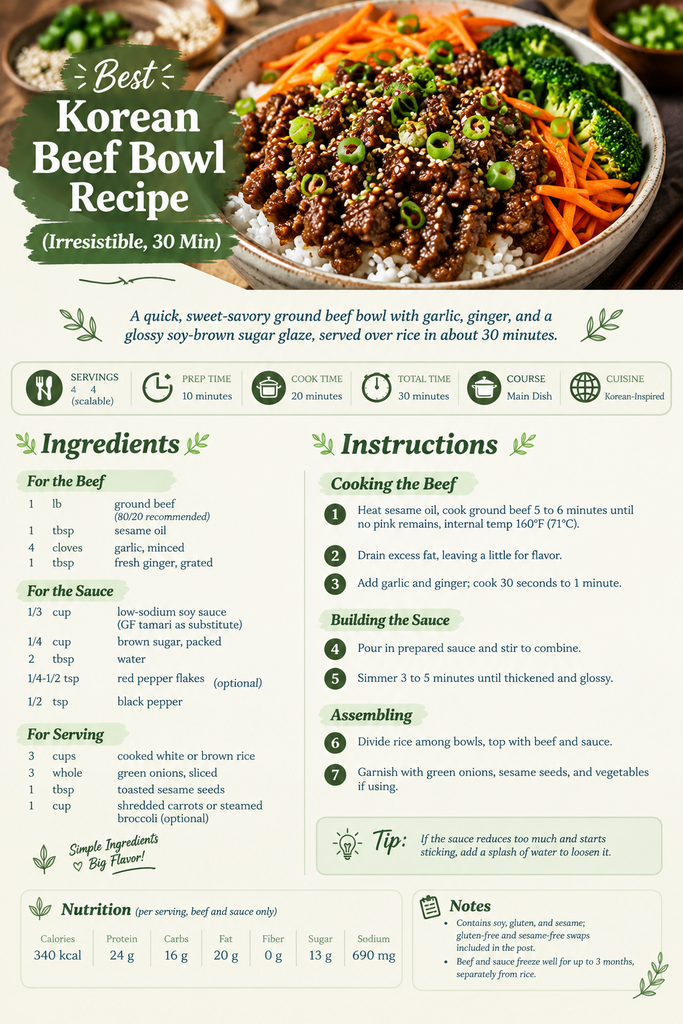
Best Korean Beef Bowl Recipe (Irresistible, 30 Min)
Weeknights don’t leave much room for anything complicated, which is exactly why this bowl has become one of the meals I reach for most often. Ground beef, a handful of pantry staples, and about 25 minutes are all it takes to get something on the table that tastes as if it came from a lot more effort than it actually did.
This isn’t a traditional Korean dish so much as an inspired weeknight version, built around the same sweet, savory, garlicky flavors found in Korean-style beef, served simply over rice.
Why You’ll Love This Korean Beef Bowl
- Ready in about 25 minutes. One skillet, no marinating, no waiting around.
- Built from pantry staples. Soy sauce, brown sugar, garlic, and ginger are ingredients most kitchens already have on hand.
- Naturally kid-friendly heat level. The sauce is sweet and savory rather than spicy, with red pepper flakes left optional for anyone who wants heat.
- Meal-prep friendly. This reheats well, making it a genuinely useful lunch option for the rest of the week.
- Easy to scale up. Doubling the recipe is as simple as using a larger skillet and doubling the sauce.
Recipe Snapshot
- Servings: 4 servings
- Difficulty: Easy
- Cuisine/Course: Korean-Inspired, Main Dish
- Prep Time: 10 minutes
- Cook Time: 20 minutes
- Total Time: 30 minutes
What makes a Korean beef bowl taste sweet and savory? A Korean beef bowl gets its signature flavor from a sauce built on soy sauce, brown sugar, garlic, and fresh ginger, cooked quickly with ground beef until the sauce reduces into a glossy glaze that coats every bite.
Ingredients
For the Beef
- 1 lb (450 g) ground beef (80/20 works well; leaner beef can be used but may need a touch more sesame oil for richness)
- 1 tbsp sesame oil
- 4 garlic cloves, minced
- 1 tbsp fresh ginger, grated
For the Sauce
- 1/3 cup (80 ml) low-sodium soy sauce (a gluten-free tamari can substitute for a gluten-free version)
- 1/4 cup (55 g) brown sugar, packed
- 2 tbsp water
- 1/4 to 1/2 tsp red pepper flakes, optional (adjust to your preferred heat level)
- 1/2 tsp black pepper
For Serving
- 3 cups cooked white or brown rice
- 3 green onions, thinly sliced
- 1 tbsp toasted sesame seeds
- 1 cup shredded carrots or steamed broccoli, optional
Recipe Timing
- Prep Time: 10 minutes
- Cook Time: 20 minutes
- Rest Time: none required
- Total Time: 30 minutes
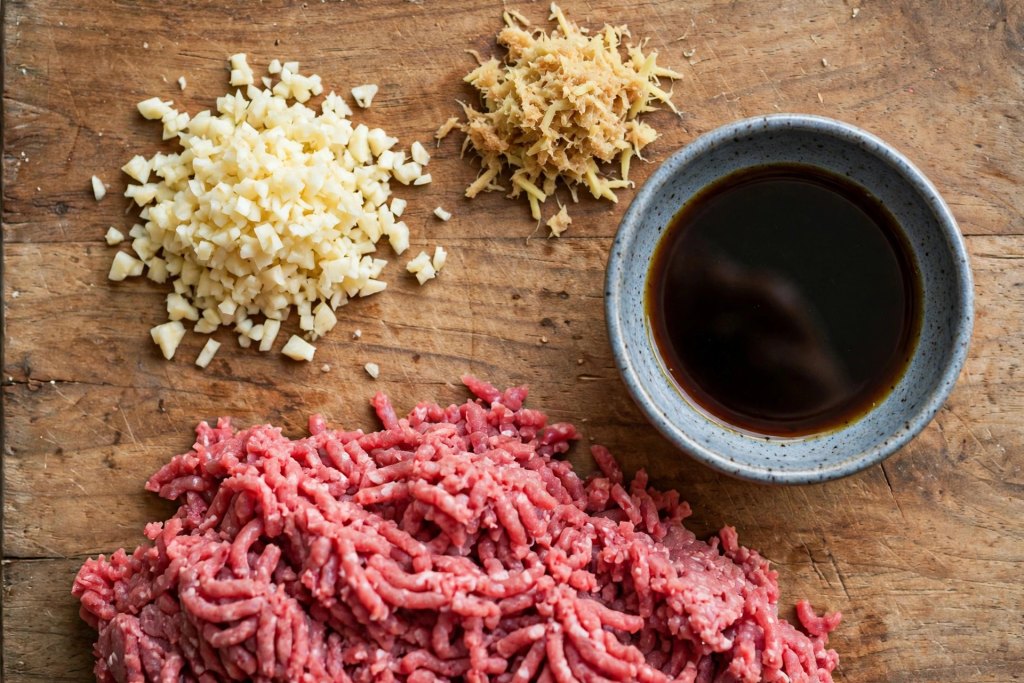
Before You Start Cooking Korean Beef
- Cook your rice first, or start it before you begin the beef, since this dish comes together quickly once you start.
- Mince the garlic and grate the ginger ahead of time so they’re ready to go straight into the hot pan.
- Whisk together the soy sauce, brown sugar, water, red pepper flakes, and black pepper in a small bowl so the sauce is ready to pour in once the beef is browned.
How to Make a Korean Beef Bowl
Cooking the Beef
- Heat the sesame oil in a large skillet over medium-high heat.
- Add the ground beef, breaking it apart with a spatula, and cook for 5 to 6 minutes until no pink remains and the beef reaches an internal temperature of 160°F (71°C).
Food safety note: wash your hands and any surfaces that touched the raw ground beef with hot soapy water before they touch any other ingredient.
- Drain any excess fat if needed, leaving a small amount in the pan for flavor.
- Add the garlic and ginger, and cook for 30 seconds to 1 minute, just until fragrant. Why this works: adding garlic and ginger after the beef, rather than at the start, prevents them from burning during the longer beef-cooking time, which would turn the flavor bitter.
Building the Sauce
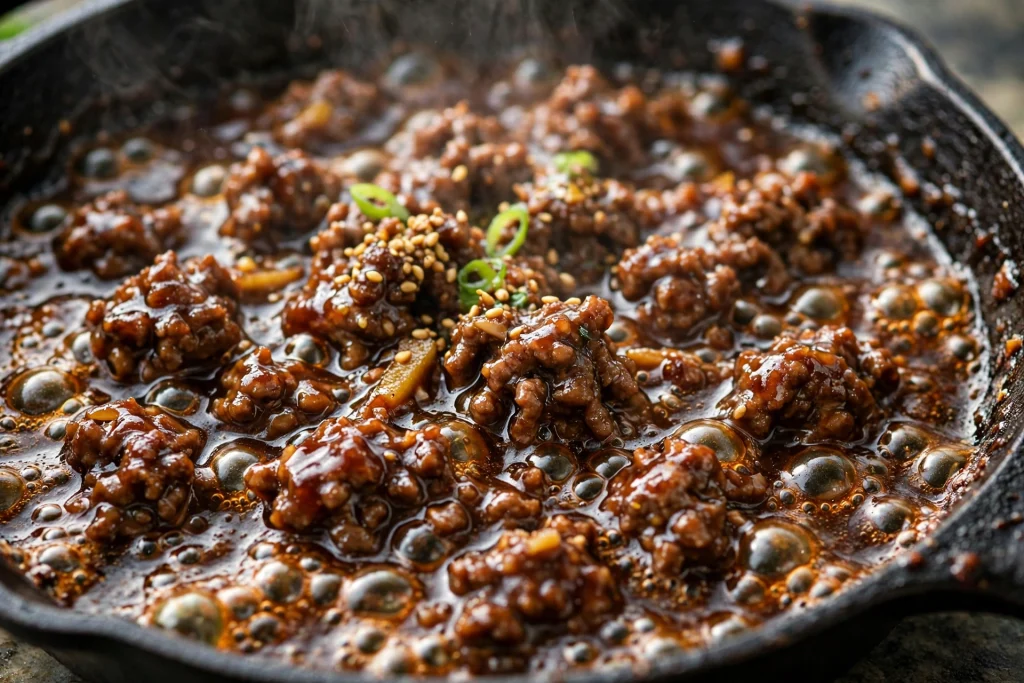
- Pour the prepared sauce into the skillet with the beef and stir to combine.
- Simmer for 3 to 5 minutes, stirring occasionally, until the sauce thickens slightly and coats the beef in a glossy glaze. Why this works: letting the sauce reduce rather than serving it thin concentrates the sweet-savory flavor and helps it cling to the rice instead of pooling at the bottom of the bowl.
💡 Quick Tip: If the sauce reduces too much and starts sticking, add a splash of water to loosen it back up.
Assembling the Bowls
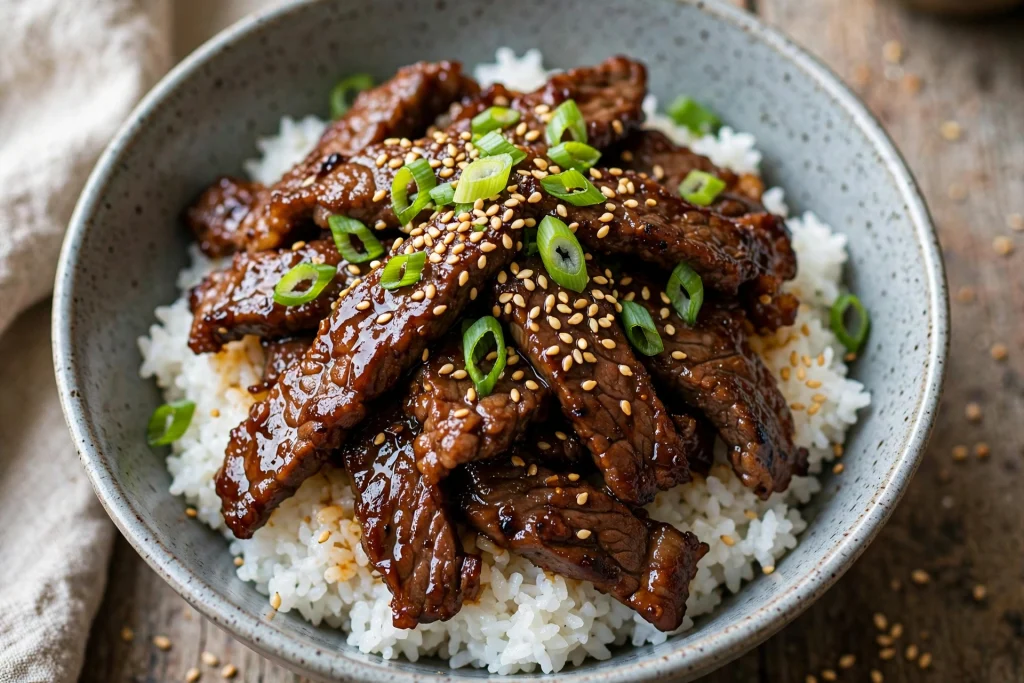
- Divide the rice among four bowls and top with the beef and sauce.
- Garnish with sliced green onions, toasted sesame seeds, and shredded carrots or steamed broccoli, if using.
Common Mistakes and Troubleshooting in making Korean Beef
Problem: The sauce tastes flat instead of rich and glossy. Why: The sauce wasn’t given enough time to reduce and thicken, so it stays thin and doesn’t cling to the beef. Fix: Let it simmer for the full 3 to 5 minutes, stirring occasionally, until it visibly coats the back of a spoon.
Problem: The garlic tastes bitter. Why: It was added too early and cooked too long alongside the beef, which can scorch it. Fix: Add garlic and ginger only after the beef is mostly cooked, and cook them just until fragrant.
Problem: The dish turns out too salty. Why: Regular soy sauce was used instead of low-sodium, which can push the overall saltiness too high once reduced. Fix: Stick with low-sodium soy sauce, and taste the sauce before serving to adjust if needed.
Variations and Substitutions
- Ground turkey or chicken swap: Either works in place of ground beef; ground poultry should reach an internal temperature of 165°F (74°C) instead of 160°F (71°C).
- Extra vegetables: Stir in shredded carrots, snap peas, or spinach directly into the skillet during the last few minutes of cooking.
- Lettuce wraps instead of rice: Spoon the beef into butter lettuce leaves for a lower-carb version.
- Spicier version: Increase the red pepper flakes, or stir in a small spoonful of gochujang along with the sauce for a deeper, spicier flavor.
Allergen Information
Contains: soy, gluten, and sesame.
- For a gluten-free version, substitute the soy sauce with gluten-free tamari.
- For a sesame-free version, omit the sesame oil (substitute a neutral oil like vegetable oil) and skip the sesame seed garnish.
- This recipe does not contain dairy, egg, nuts, or shellfish as written. This information reflects the recipe as written and does not guarantee safety for your specific dietary needs or kitchen environment.
What to Serve With a Korean Beef Bowl
- Steamed broccoli or bok choy
- A simple cucumber salad with rice vinegar
- Kimchi on the side for extra tang
- A fried egg on top for a heartier meal
Storage, Reheating, Freezing, and Make-Ahead
- Refrigerator: Store the beef (separate from rice, if possible) in an airtight container for up to 4 days.
- Reheating: Warm in a skillet over medium heat or in the microwave until heated through, adding a small splash of water if the sauce has thickened too much.
- Freezer: The cooked beef and sauce freeze well for up to 3 months; thaw overnight in the refrigerator before reheating. Freeze separately from the rice for the best texture.
- Make-ahead: The sauce can be mixed up to 3 days ahead and stored in the fridge, ready to pour in once the beef is cooked.
Nutrition Information (Per Serving, Based on 4 Servings, Beef and Sauce Only)
- Calories: 340
- Protein: 24 g
- Carbohydrates: 16 g
- Fat: 20 g
- Fiber: 0 g
- Sugar: 13 g
- Sodium: 690 mg
Values are approximate and may vary based on exact ingredients and brands used, and do not include rice or optional toppings.
Frequently Asked Questions
Can I make Korean beef bowls ahead of time? Yes, the beef and sauce reheat well, making this a solid meal-prep option. Store the beef separately from the rice for the best texture when reheating.
Why does my sauce taste too salty? This usually happens when regular soy sauce is used instead of low-sodium, since the sauce reduces and concentrates as it simmers. Stick with low-sodium soy sauce and taste before adding extra salt.
Can I substitute ground turkey for ground beef? Yes, ground turkey or chicken both work well in this recipe. Just note that ground poultry needs to reach a slightly higher internal temperature of 165°F (74°C) for food safety, compared to 160°F (71°C) for beef.
How do I know the ground beef is fully cooked? The beef should show no pink remaining and reach an internal temperature of 160°F (71°C) when checked with a meat thermometer.
Is this recipe safe for someone with a soy allergy? No, this recipe contains soy sauce, which isn’t safe for a soy allergy as written. There isn’t a reliable soy-free substitute that replicates the same flavor, so this dish is best avoided for that allergy.
Can I make this less sweet? Yes, reduce the brown sugar to 2 to 3 tablespoons for a less sweet, more savory-forward sauce.
If you try this one, I’d love to hear how it turned out. Leaving a star rating or a quick comment below genuinely helps other home cooks find this recipe.
Final Thoughts
This Korean beef bowl earns its spot as a regular weeknight meal because it asks so little and delivers so much: one pan, a short ingredient list, and a sauce that turns basic ground beef into something worth looking forward to. Once you’ve made it a couple of times, it becomes one of those recipes you don’t need to think twice about on a busy night.





One Comment
Comments are closed.