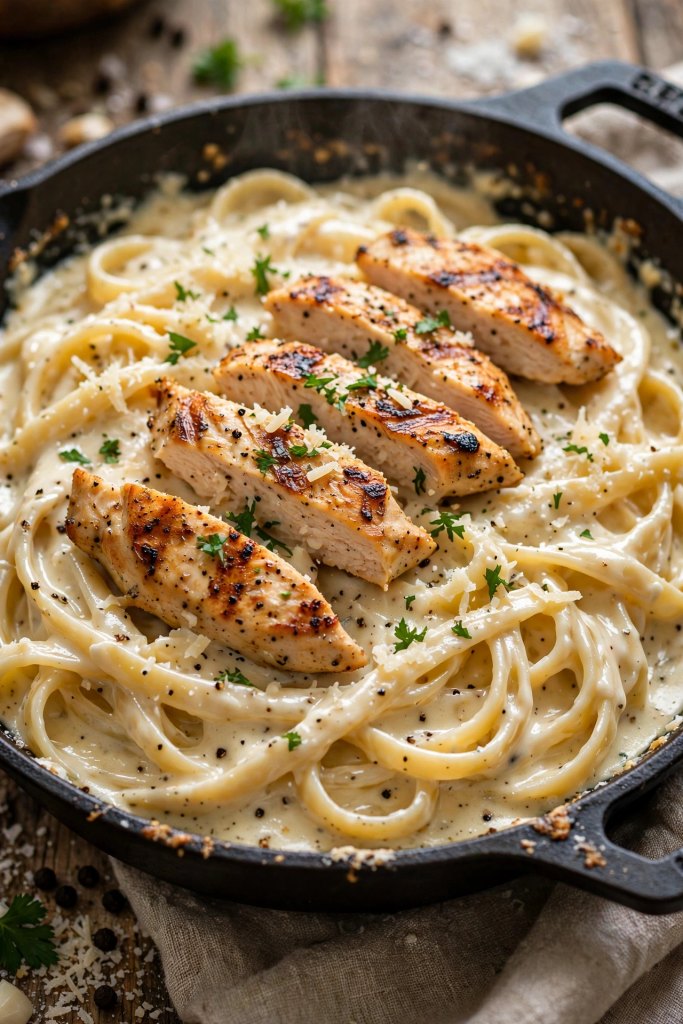
Easy Chicken Alfredo Pasta Recipe (Ready in 30 Minutes)
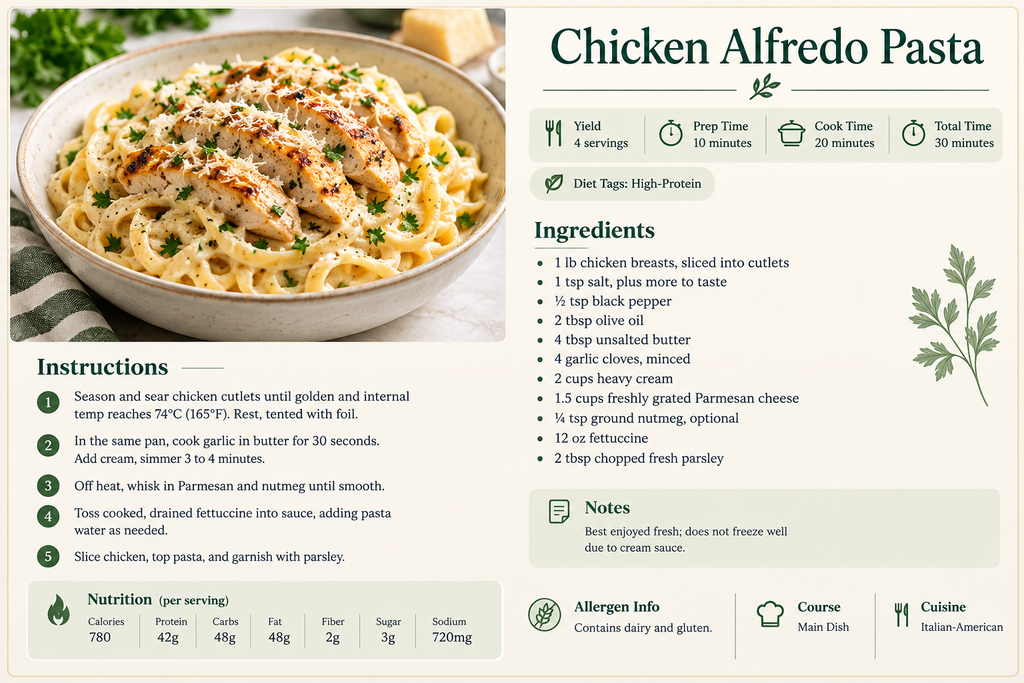
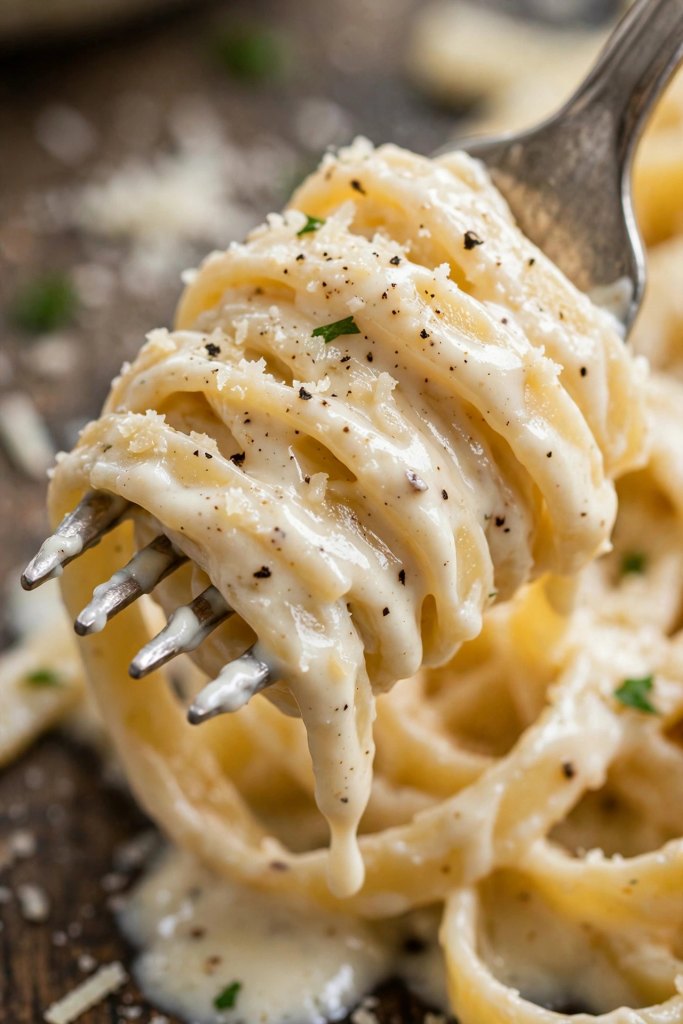
This chicken Alfredo pasta skips the jarred sauce entirely, and the difference is obvious from the first bite: butter, garlic, cream, and fresh Parmesan simmered together until it clings to every strand of pasta instead of just sitting on top. Add seared chicken, and this becomes a dinner that feels far more effort than the 30 minutes it actually takes.
If you just need the short version: sear the chicken, build a quick butter-garlic-cream sauce in the same pan, whisk in fresh Parmesan off the heat, then toss with hot pasta and the sliced chicken.
Why You’ll Love This Recipe
- Ready in about 30 minutes, realistic for a weeknight
- The sauce is genuinely simple, with five main ingredients beyond salt and pepper
- No jarred sauce, so you control the richness and the salt level
- One pan handles the chicken and the sauce, keeping cleanup manageable
- Easy to scale up for a bigger group without changing the method
Recipe Snapshot
- Servings: 4
- Difficulty: Easy
- Diet Tags: High-Protein
- Cuisine / Course: Italian-American / Main Dish
- Prep Time: 10 minutes
- Cook Time: 20 minutes
- Total Time: 30 minutes
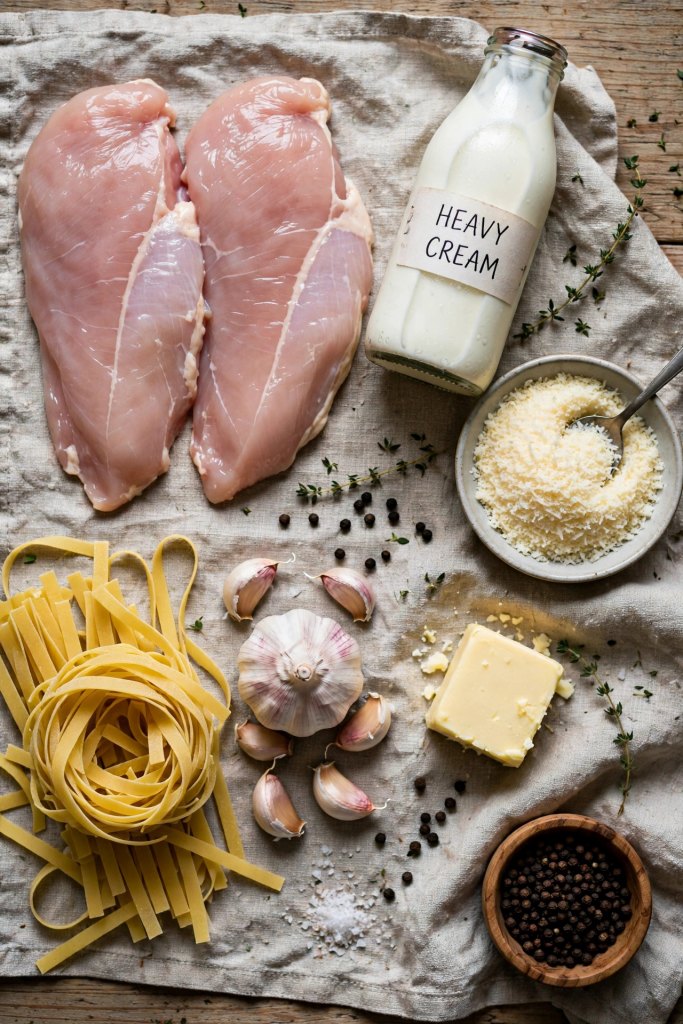
Ingredients
Recipe Timing
- Prep Time: 10 minutes
- Cook Time: 20 minutes
- Total Time: 30 minutes
For the Dish
- 1 lb (450g) boneless, skinless chicken breasts, sliced horizontally into thin cutlets
- 1 teaspoon salt, plus more to taste
- ½ teaspoon black pepper
- 2 tablespoons olive oil
- 4 tablespoons unsalted butter (dairy)
- 4 garlic cloves, minced
- 2 cups (480 ml) heavy cream (dairy; substitute half-and-half for a lighter, slightly thinner sauce)
- 1.5 cups freshly grated Parmesan cheese (dairy; pre-grated has anti-caking starch that can make the sauce grainy, so grate fresh from a block if you can)
- ¼ teaspoon ground nutmeg, optional (adds warmth without tasting overtly spiced)
- 12 oz (340 g) fettuccine (contains gluten; a gluten-free fettuccine or other shape works as a substitute)
- 2 tablespoons chopped fresh parsley, for garnish
Allergen and Dietary Disclosure
This recipe contains dairy (butter, cream, Parmesan) and gluten (fettuccine). For a dairy-free version, use a plant-based butter and a dairy-free cream alternative and a dairy-free hard cheese in place of the Parmesan; the texture will differ somewhat from the original. For a gluten-free version, substitute a gluten-free fettuccine or other pasta shape. These substitutions have not been tested here and are offered as general guidance only. This recipe should not be considered guaranteed safe for anyone with a diagnosed food allergy; always check every ingredient label individually.
Preparation (Before You Start)
Slice the chicken breasts horizontally into thinner cutlets so they cook quickly and evenly, and pat them dry before seasoning, since a dry surface sears better than a damp one. Grate the Parmesan fresh if you can, and bring a large pot of salted water to a boil for the pasta so it’s ready around the same time as the sauce.
Step-by-Step Instructions
Searing the Chicken
Season the chicken cutlets with salt and pepper on both sides. Heat the olive oil in a large skillet over medium-high heat until shimmering. Add the chicken and sear for 3 to 4 minutes per side, until golden and the internal temperature reaches 74°C (165°F) at the thickest part. According to the USDA’s guidance on safe minimum internal temperatures, this is the standard target for poultry. Why this matters: slicing the chicken into thinner cutlets first means it cooks through in the same amount of time it takes to develop a good sear, instead of browning on the outside long before the center is done.
Wash your hands and any surfaces that touched the raw chicken before continuing. Transfer the chicken to a cutting board, tent loosely with foil, and let it rest while you build the sauce.
Building the Sauce
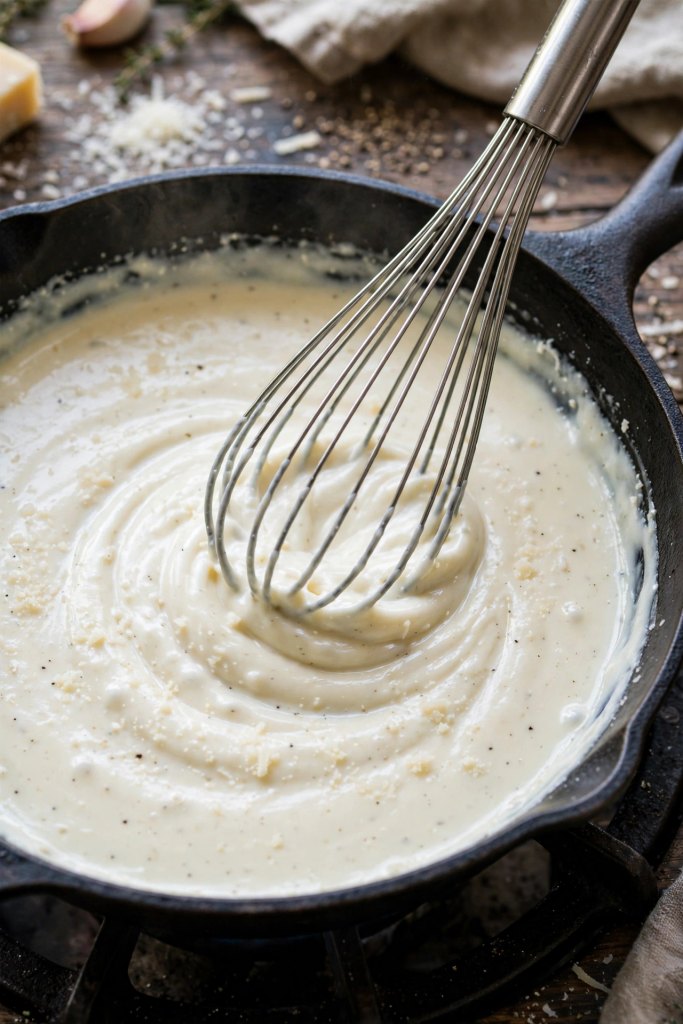
In the same pan, melt the butter over medium heat. Add the garlic and cook for 30 seconds, just until fragrant, stirring constantly so it doesn’t brown. Pour in the heavy cream, scraping up any browned bits from the chicken left in the pan. Bring to a gentle simmer and let it cook for 3 to 4 minutes until it thickens slightly.
Remove the pan from the heat completely and whisk in the Parmesan a handful at a time, along with the nutmeg if using, until the sauce is smooth. Why this matters: adding the cheese off the heat prevents it from clumping into grainy curds, since Parmesan proteins seize up when they hit actively simmering liquid instead of melting in smoothly.
Combining and Serving
Cook the fettuccine in the boiling salted water according to package instructions until al dente, then drain, reserving a small cup of pasta water. Slice the rested chicken into strips. Toss the drained pasta directly into the sauce, adding a splash of the reserved pasta water if it needs loosening, then top with the sliced chicken and fresh parsley before serving.
What Actually Makes This Chicken Alfredo Pasta Work
The difference between a smooth, glossy sauce and one that turns grainy or oily almost always comes down to heat control at the very end. A lot of homemade Alfredo recipes fail specifically because the cheese goes in while the pan is still actively simmering, which causes the proteins to clump instead of melt. Pulling the pan off the heat completely before whisking in the Parmesan, and using freshly grated cheese instead of the pre-shredded kind, solves most texture problems before they start.
Common Mistakes and Troubleshooting
Problem: The sauce turns out grainy instead of smooth. Why: The cheese was added while the pan was still on active heat, or pre-shredded cheese with anti-caking starch was used. Fix: Take the pan off the heat completely before whisking in the Parmesan, and grate it fresh from a block if possible.
Problem: The sauce is too thin. Why: It wasn’t simmered long enough before the cheese was added, or too much cream was used relative to the cheese. Fix: Let the cream simmer a few extra minutes to reduce slightly before whisking in the Parmesan, which also helps it thicken as it melts.
Problem: The chicken turns out dry. Why: It was sliced too thick and needed extra time in the pan to cook through, drying out in the process. Fix: Slice the chicken into thinner, even cutlets before searing so it cooks through quickly without needing extended time in the pan.
Variations to Try
- Garlic-Forward Version: double the garlic and add it in two stages, once at the start of the sauce and again just before serving for a sharper bite
- Broccoli Version: stir in a cup of steamed broccoli florets along with the pasta for added texture and color
- Lighter Version: substitute half-and-half for the heavy cream and reduce the Parmesan slightly for a thinner, less rich sauce
What to Serve With It
- Garlic bread or a crusty baguette
- A simple green salad with a light vinaigrette
- Roasted asparagus or steamed broccoli
Storing and Reheating
Store leftovers in an airtight container in the fridge for up to 3 days. Reheat gently on the stovetop over low heat with a splash of milk or cream to loosen the sauce, since it thickens considerably once chilled. This dish doesn’t freeze well, since cream-based sauces tend to separate after thawing.
Nutrition Information
(Per serving, based on 4 servings)
- Calories: approximately 780
- Protein: approximately 42 g
- Carbohydrates: approximately 48 g
- Fat: approximately 48 g
- Fiber: approximately 2 g
- Sugar: approximately 3 g
- Sodium: approximately 720 mg
Values are approximate and may vary based on the exact ingredients and brands used.
Frequently Asked Questions
Can I make this ahead of time?
The sauce is best made fresh, since it can separate slightly when reheated, though the chicken can be seared a day ahead and reheated gently before slicing and serving on top.
Why did my sauce turn out grainy?
This almost always happens when the cheese is added while the pan is still on active heat. Take the pan completely off the burner before whisking in the Parmesan, and use freshly grated cheese rather than the pre-shredded kind.
Can I use a different pasta shape?
Yes, penne, linguine, and rigatoni all work well in place of fettuccine, since the sauce clings to most shapes similarly. Just adjust the boiling time according to whatever shape’s package instructions.
Can I freeze this dish?
It’s not recommended, since cream-based sauces tend to separate and turn grainy after freezing and thawing. It’s best enjoyed fresh or within a few days from the fridge.
How do I know the chicken is fully cooked?
It should show no pink in the center once sliced and have an internal temperature of at least 74°C (165°F) measured at the thickest part with an instant-read thermometer.
Is this recipe suitable for someone with a dairy or gluten allergy?
Not as written, since it contains both dairy (butter, cream, Parmesan) and gluten (fettuccine). Substitutions are suggested in the allergen section above, but they haven’t been specifically tested for allergy safety, so anyone with a diagnosed allergy should check every ingredient carefully.
Conclusion
Chicken Alfredo pasta earns its place as a go-to dinner because the homemade sauce takes barely more effort than opening a jar, and the difference in flavor is immediately obvious. Once whisking the cheese in off the heat becomes second nature, this turns into one of those meals you can make without really thinking twice about it.