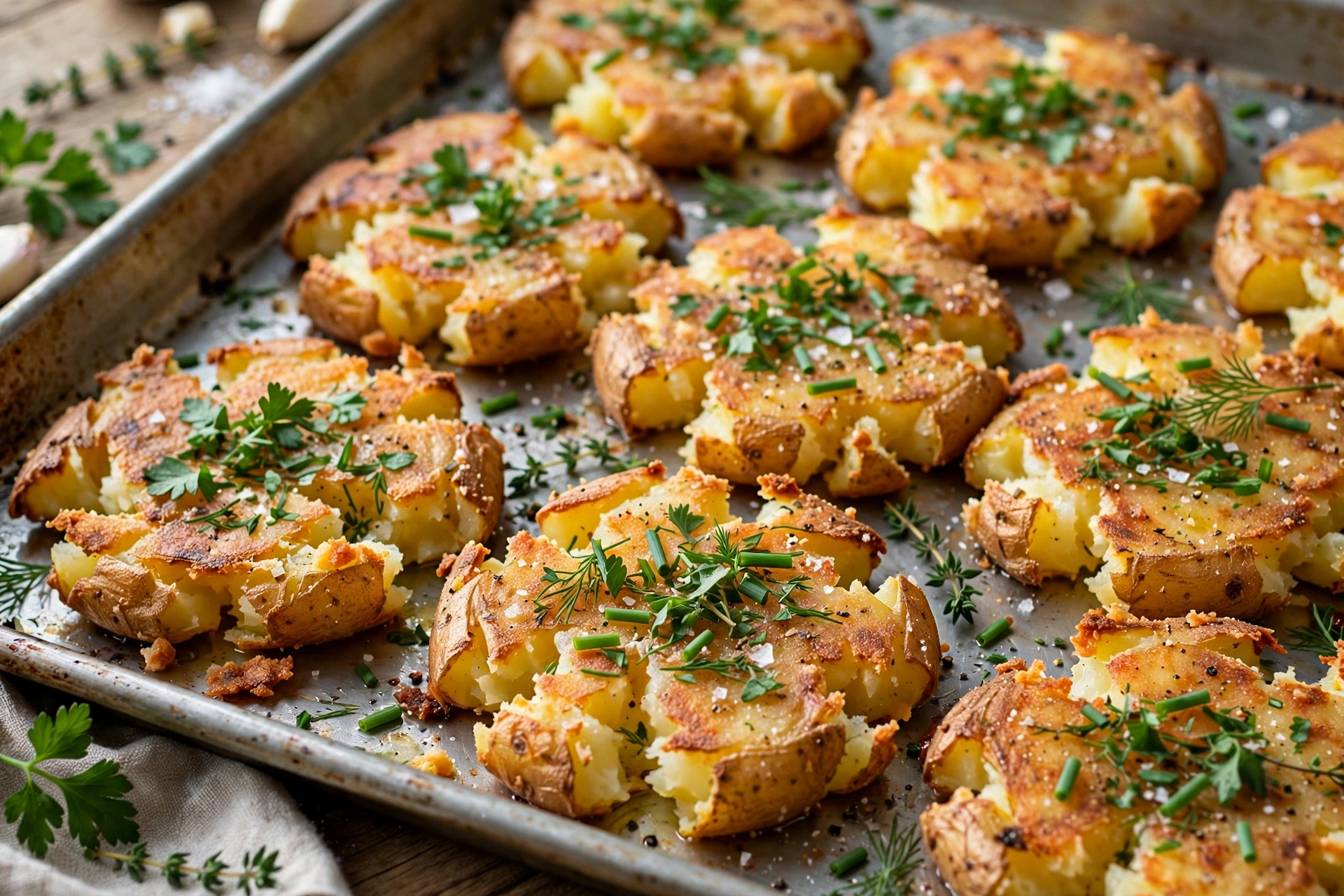
Amazing Easy Smashed Potatoes Recipe (Crispy in 45 Minutes)
Smashed Potatoes
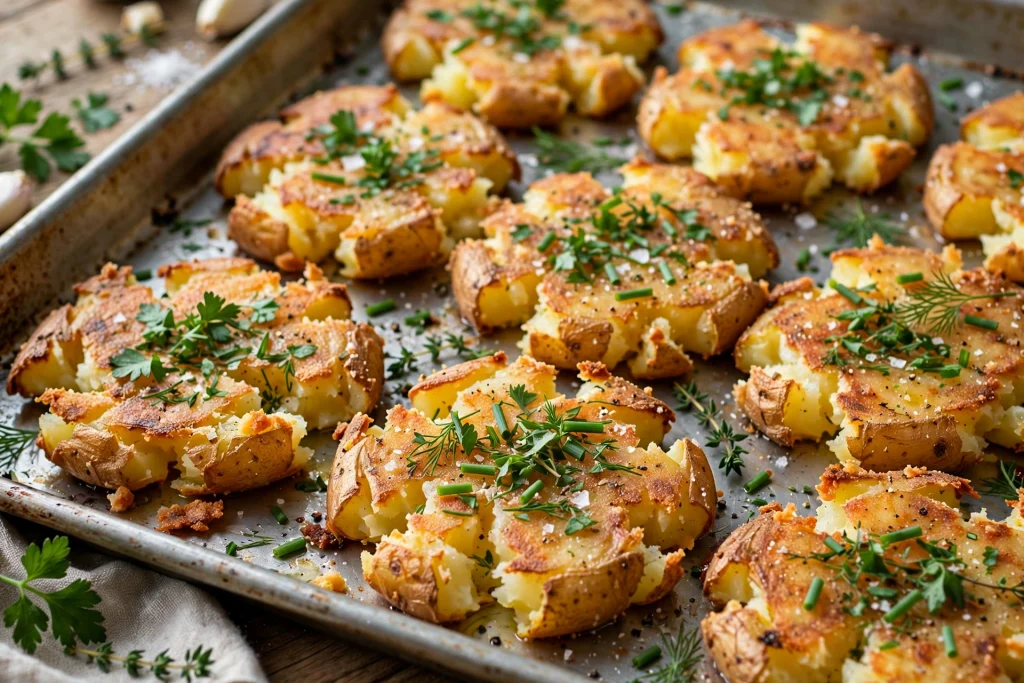
Regular roasted potatoes are fine, but smashed potatoes solve a problem you didn’t know you had: not enough crispy surface area. Boiling them tender first, then smashing each one flat before roasting, means every single potato ends up with a lacy, deeply browned edge instead of just the ones that happened to land cut-side down on the pan.
If you’re wondering what actually makes the difference between crispy and soggy smashed potatoes, it comes down to two things: letting them steam-dry after boiling before you smash them and not overcrowding the pan, both of which are easy to fix once you know to watch for them.
Why You’ll Love These Smashed Potatoes
- Way more crispy surface area than regular roasted potato halves
- Only three ingredients needed beyond salt, pepper, and oil
- Boiling ahead of time means the roasting step is mostly hands-off
- Works with almost any small potato variety you already have on hand
- Just as good as a side dish or piled up with toppings as a snack
Recipe Snapshot
- Servings: 4
- Difficulty: Easy
- Diet Tags: Vegetarian, Gluten-Free
- Cuisine / Course: American / Side Dish
- Prep Time: 10 minutes
- Cook Time: 45 minutes (includes boiling and roasting)
- Total Time: 55 minutes
Ingredient
Recipe Timing
- Prep Time: 10 minutes
- Cook Time: 45 minutes (includes boiling and roasting)
- Total Time: 55 minutes
For the Potatoes
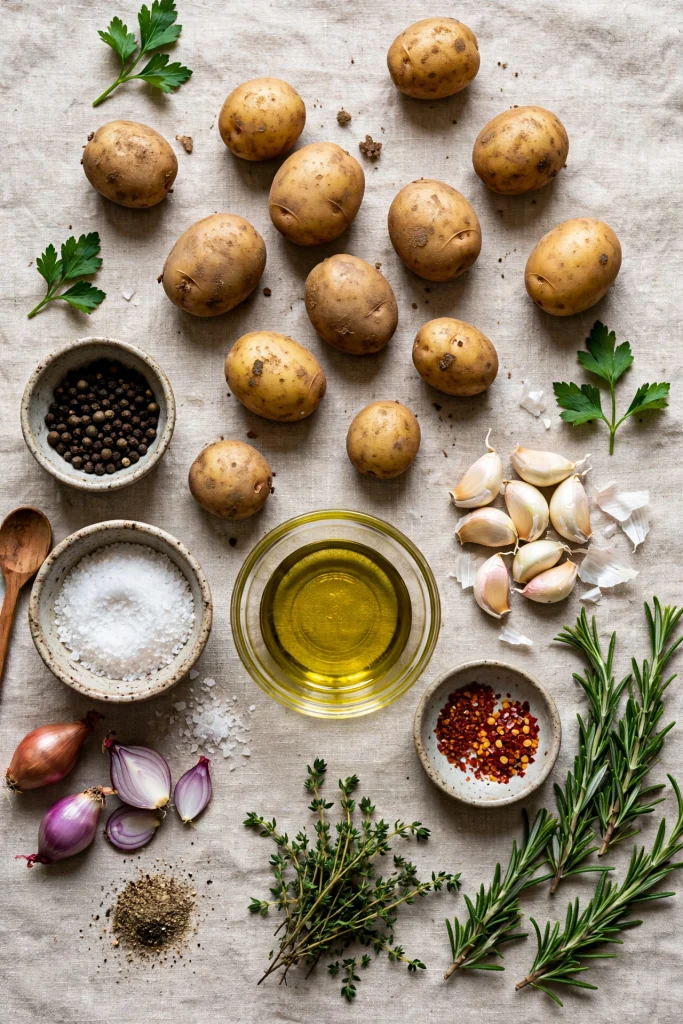
- 1.5 lbs (680 g) small potatoes, such as baby Yukon Gold or red potatoes, similar size for even cooking
- 1 tablespoon salt, for the boiling water
- 3 tablespoons olive oil, divided
- ½ teaspoon salt, plus more to taste
- ¼ teaspoon black pepper
- 2 garlic cloves, minced (optional; adds a savory edge without overpowering the potato flavor)
For the Topping
- 2 tablespoons grated Parmesan cheese, optional (dairy; omit or use a dairy-free hard cheese alternative if needed)
- 1 tablespoon chopped fresh rosemary or parsley, for garnish
- Flaky sea salt, for finishing
Allergen and Dietary Disclosure
This recipe is naturally gluten-free and vegetarian as written. It contains dairy only if you use the optional Parmesan topping; omit it or swap in a dairy-free hard cheese alternative for a fully dairy-free version. This recipe is not guaranteed safe for anyone with a diagnosed food allergy; always check every ingredient label individually.
Equipment
A sturdy flat-bottomed glass measuring cup, or a dedicated potato masher, works for smashing, but avoid anything with a thin or sharp edge, since it can tear the potato skin instead of pressing it flat. A large, rimmed sheet pan is also worth having, since a pan that’s too small forces the potatoes to crowd together and steam instead of crisping.
Preparation (Before You Start)
Wash the potatoes well since the skins stay on, and try to pick potatoes that are all roughly the same size so they finish boiling at the same time. Preheat the oven to 220°C (425°F) while the potatoes boil, so it’s fully heated by the time you’re ready to roast.
Step-by-Step Instructions
Boiling the Potatoes
Place the potatoes in a large pot and cover with cold water by about an inch. Add the tablespoon of salt to the water. Bring to a boil over high heat, then reduce to a simmer and cook for 15 to 20 minutes until a fork slides into the center of a potato with almost no resistance. Why this matters: starting the potatoes in cold water rather than dropping them into already-boiling water lets them cook more evenly all the way through, instead of overcooking on the outside before the center is tender.
Drain the potatoes well and let them sit in the colander, uncovered, for about 5 minutes. Why this matters: this brief steam-dry step lets excess moisture escape from the surface, and a drier potato skin is what actually crisps up in the oven; a still-damp potato mostly just steams.
Smashing the Potatoes
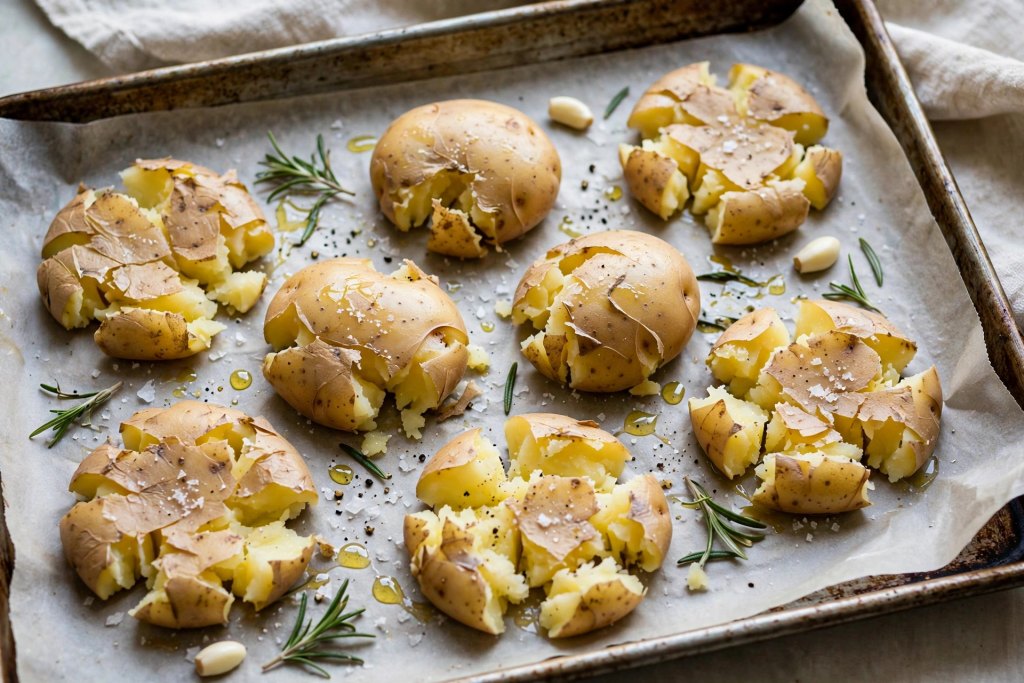
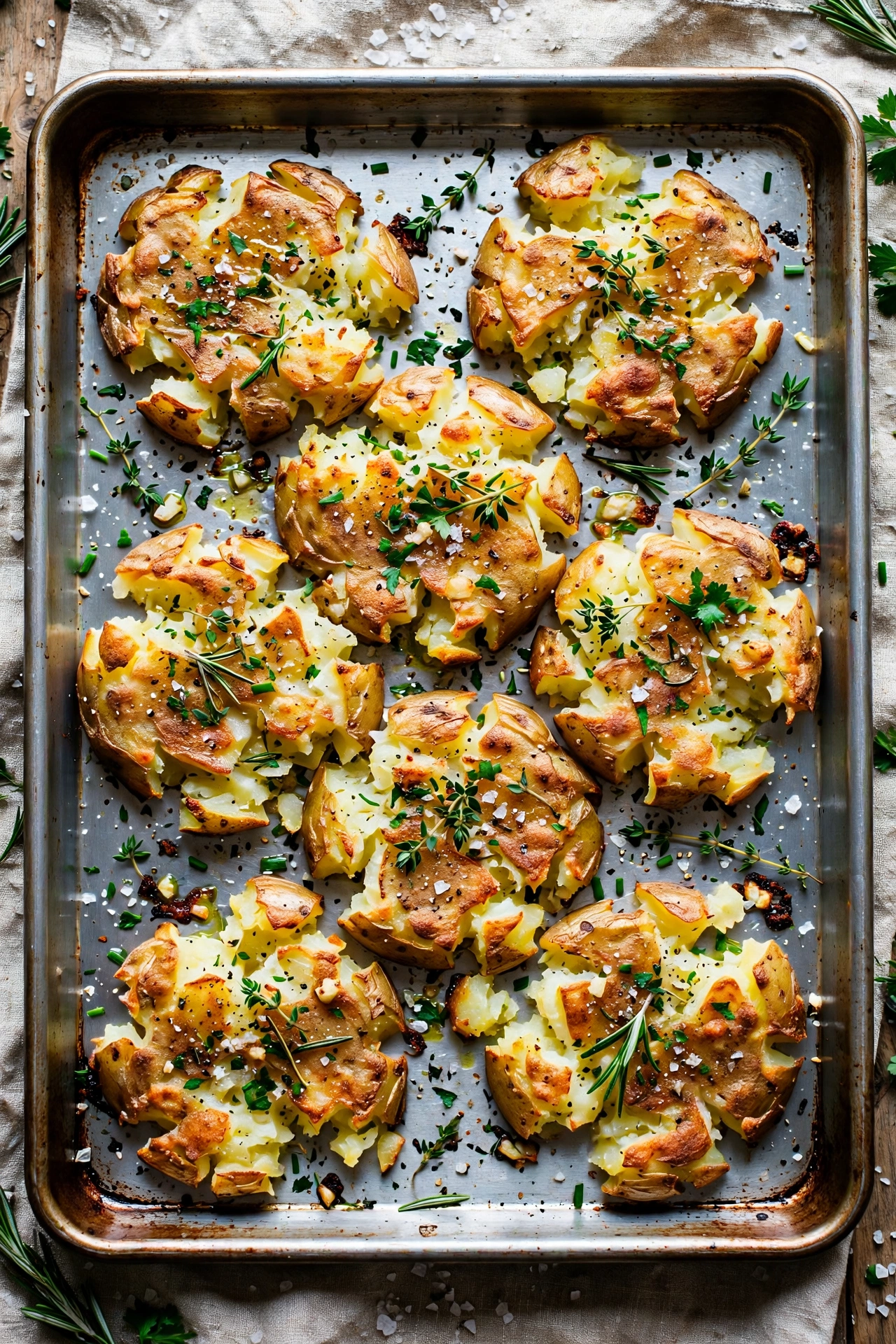
Transfer the potatoes to a parchment-lined sheet pan, spacing them a few inches apart. Using the bottom of a glass or a potato masher, press down firmly but slowly on each potato until it flattens to about half an inch thick and the skin cracks open in a few places. Why this matters: those cracks are where the crispiest bits form during roasting, since the jagged, broken edges catch more direct heat than a smooth surface would.
Drizzle 2 tablespoons of the olive oil evenly over the smashed potatoes, then sprinkle with the salt, pepper, and minced garlic if using. Make sure the oil reaches into the cracks, not just the tops.
Roasting
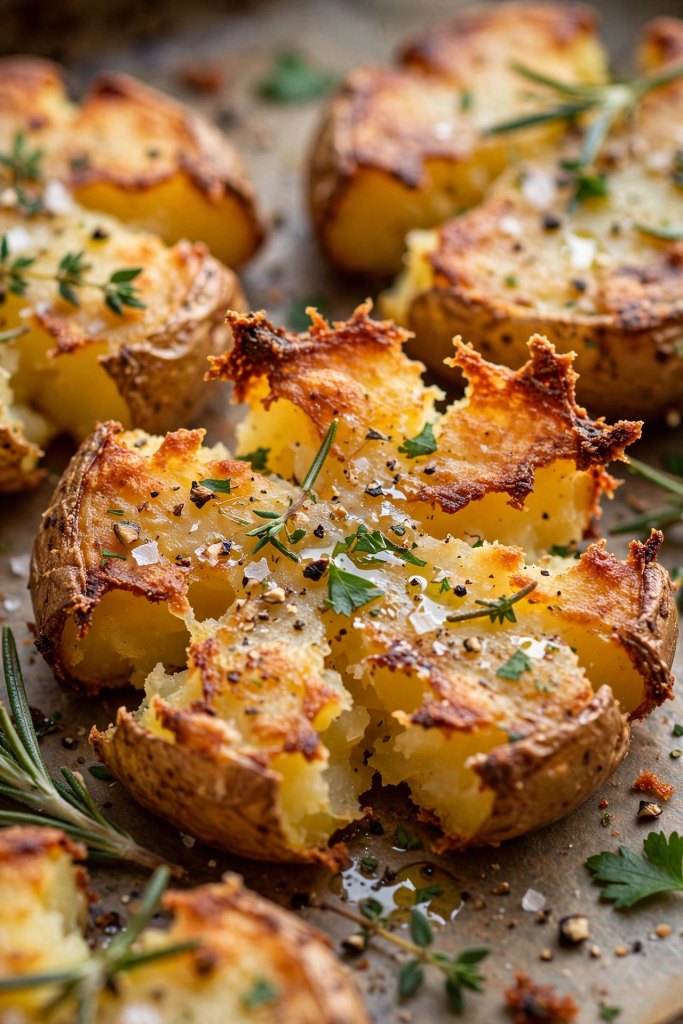
Roast at 220°C (425°F) for 20 to 25 minutes, until the edges are deeply golden brown and visibly crisp. Don’t flip them partway through, since the goal is maximum contact time between the flattened side and the hot pan. If the potatoes are still pale after 20 minutes, give them another 5 to 8 minutes rather than pulling them early, since the last few minutes are usually where most of the crisping happens.
Remove from the oven, drizzle with the remaining tablespoon of olive oil, and top with Parmesan if using, fresh herbs, and a pinch of flaky sea salt before serving.
What Actually Makes This Work
The difference between crispy and merely browned smashed potatoes comes down to surface moisture more than anything else. A lot of people boil the potatoes, smash them while they’re still visibly wet, and end up with a pan that steams instead of roasts, since trapped moisture has to evaporate before any actual browning can start. Letting the boiled potatoes sit uncovered for even a few minutes before smashing makes a noticeably bigger difference than any amount of extra oil or a hotter oven.
Common Mistakes and Troubleshooting
Problem: The potatoes come out soft and pale instead of crispy. Why: They weren’t dried enough after boiling, or the pan was overcrowded, both of which trap steam around the potatoes instead of letting them roast. Fix: Let the boiled potatoes air-dry a few extra minutes before smashing, and give each one enough space on the pan so they’re not touching.
Problem: The potatoes fall apart when you try to smash them. Why: They were either overcooked and too soft to hold together or smashed too aggressively in one quick motion instead of pressed down slowly. Fix: Check for doneness a couple of minutes earlier next time, and press down gradually rather than all at once, which gives the potato a chance to flatten instead of collapsing.
Problem: The bottoms burn before the tops crisp up. Why: The oven rack was too low, putting the pan too close to the direct heat source. Fix: Use the center rack, and if your oven runs hot, check a few minutes early.
Variations to Try
- Spicy Version: toss with a pinch of cayenne or chili flakes along with the salt and pepper before roasting
- Garlic Herb Butter Version: swap half the olive oil for melted butter mixed with minced garlic for a richer finish
- Loaded Version: top the finished potatoes with shredded cheddar, crumbled bacon-style topping, and a drizzle of sour cream for a fully loaded side
What to Serve With Smashed Potatoes
- Grilled or roasted chicken
- A simple green salad
- Garlic aioli or sour cream for dipping
Storing and Reheating
Store leftovers in an airtight container in the fridge for up to 4 days. Reheat in the oven or air fryer at 200°C (400°F) for 8 to 10 minutes to bring back some of the crispness; a microwave will heat them through but leaves them soft rather than crisp.
Nutrition Information
(Per serving, based on 4 servings, without optional Parmesan)
- Calories: approximately 210
- Protein: approximately 3 g
- Carbohydrates: approximately 28 g
- Fat: approximately 10 g
- Fiber: approximately 3 g
- Sugar: approximately 1 g
- Sodium: approximately 480 mg
Values are approximate and may vary based on the exact ingredients and brands used.
Frequently Asked Questions
Can I make smashed potatoes ahead of time?
You can boil and even smash the potatoes a few hours ahead, then refrigerate them on the pan until you’re ready to roast. Bring them closer to room temperature before roasting so the cook time stays accurate.
Why did my potatoes turn out soggy instead of crispy?
This almost always comes down to leftover moisture on the potato surface after boiling or a pan that’s too crowded for steam to escape. Letting them air-dry before smashing and giving them space on the pan usually solves both issues.
What size potatoes work best for this recipe?
Small potatoes, roughly golf-ball sized or a bit smaller, work best since they cook through quickly and flatten into a manageable single layer. Larger potatoes take longer to boil through and don’t smash as evenly.
Can I use a different type of potato?
Yes, baby red potatoes, fingerlings, and baby Yukon Golds all work well because of their thin, tender skins. Waxy potato varieties generally hold their shape better through the boiling and smashing process than starchy baking potatoes.
How do I know the potatoes are done roasting?
Look for deep golden brown, visibly crisp edges rather than relying on a timer alone, since oven strength and pan size both affect actual roasting time. If the edges still look pale after the suggested time, give them a few more minutes rather than pulling them early.
Conclusion
Smashed potatoes earn a regular spot in the rotation because the extra ten minutes of boiling and smashing genuinely pay off in a crispy surface area that regular roasted potatoes just can’t match. Once you’ve made a batch and seen how much of the crunch you were missing before? Going back to plain roasted halves feels like settling for less.
Smashed Potatoes Recipe
Ingredients
Method
- Instructions:
- Boil potatoes in salted water for 15 to 20 minutes until fork-tender. Drain and air-dry for 5 minutes.
- Transfer to a sheet pan and smash each potato flat with a glass or masher.
- Drizzle with 2 tbsp olive oil, and season with salt, pepper, and garlic if using.
- Roast at 220°C (425°F) for 20 to 25 minutes until deeply golden and crisp.
- Drizzle with remaining oil, top with Parmesan, herbs, and flaky salt.

2 Comments
Comments are closed.