Soft Gingerbread Cookies Recipe (24 Perfect Cut-Outs)
The difference between a gingerbread man that keeps its arms and one that spreads into a blob is cold dough and a short second chill. Warm butter melts before the cookie sets, so the shape slumps in the first minutes in the oven. This gingerbread cookie recipe keeps the butter cold, rolls the dough to an even thickness, and bakes the cookies just until the edges set.
Why do gingerbread cookies spread? Gingerbread cookies spread when the butter is warm, and the dough goes into a hot oven before it firms up. Cold dough holds its shape because the fat stays solid until the cookie starts to set. That is why this gingerbread cookie recipe chills the dough, then chills the cut shapes again.

Why You’ll Love This Gingerbread Cookies Recipe
This gingerbread cookies recipe is built for bakers who want soft cookies with sharp shapes.
- The cut shapes stay sharp, so gingerbread men keep arms, legs, and faces after baking.
- The centers stay soft while the edges get a light crisp bite, not a hard cracker texture.
- Molasses and brown sugar give a deep, warm spice flavor without making the cookies overly sweet.
- The dough freezes well, so you can mix it now and bake fresh cookies later in December.
Recipe Snapshot
Use this gingerbread cookies recipe as a guide for timing, yield, and storage.
Servings: 24 cookies. Difficulty: Easy. Course: Dessert. Cuisine: American. Diet Tags: Freezer-Friendly. Tags: gingerbread cookies, Christmas cookies, holiday baking. Prep Time: 40 minutes. Rest Time: 75 minutes. Cook Time: 24 minutes. Cooling Time: 10 minutes. Total Time: 149 minutes (2 hours 29 minutes).
Ingredients
For the Dough
- All-purpose flour, 3 cups (360 g), spooned and leveled (gives structure; scooping packs in extra flour and makes dry cookies)
- Ground ginger, 2 teaspoons (main spice flavor; use fresh ground ginger, old ginger tastes flat)
- Ground cinnamon, 1 teaspoon (adds warmth)
- Ground cloves, 1/4 teaspoon (strong, so a small amount is enough)
- Baking soda, 1 teaspoon (works with molasses to give a light lift)
- Salt, 1/2 teaspoon
- Unsalted butter, softened, 3/4 cup (170 g) (cool and pliable, not melted; melted butter causes spreading)
- Brown sugar, packed, 3/4 cup (150 g) (adds chew and color)
- Molasses, unsulphured, 1/2 cup (120 ml) (gives the classic gingerbread color and deep flavor; dark honey or maple syrup can replace it, but the flavor will be sweeter and less deep)
- Large egg, 1 (binds the dough)
- Vanilla extract, 1 teaspoon
Recipe Timing
Prep Time: 40 minutes. Rest Time: 75 minutes. Cook Time: 24 minutes. Cooling Time: 10 minutes. Total Time: 149 minutes. Prep covers mixing the dough and rolling and cutting both discs. Rest covers chilling the dough for 60 minutes and chilling both trays of cut shapes for 15 minutes.
Equipment
Stand mixer or hand mixer, rolling pin, cookie cutters, 2 baking sheets, parchment paper, wire rack.
Before You Start
Measure all ingredients before you mix. Leave the butter out until it is cool and pliable, not greasy. Line both baking sheets with parchment paper now, so the cut shapes can go straight onto a tray. Wash your hands after handling the raw egg, and do not taste raw dough. Preheat the oven later, during the last 10 minutes of the second chill, so the oven is ready without adding extra waiting time.
Read through this gingerbread cookies recipe once before you mix, so chilling time does not surprise you.
How to Make This Gingerbread Cookies Recipe
Preparing the Dough
- Whisk the flour, ginger, cinnamon, cloves, baking soda, and salt in a medium bowl until no spice clumps remain.
- Beat the butter and brown sugar in a large bowl for 2 to 3 minutes until pale and fluffy.
- Add the molasses, egg, and vanilla, and beat until combined. Wash your hands after handling the raw egg, and do not taste the raw dough.
- Add the dry ingredients in two parts, mixing on low just until a soft dough forms. Stop as soon as no dry flour shows.
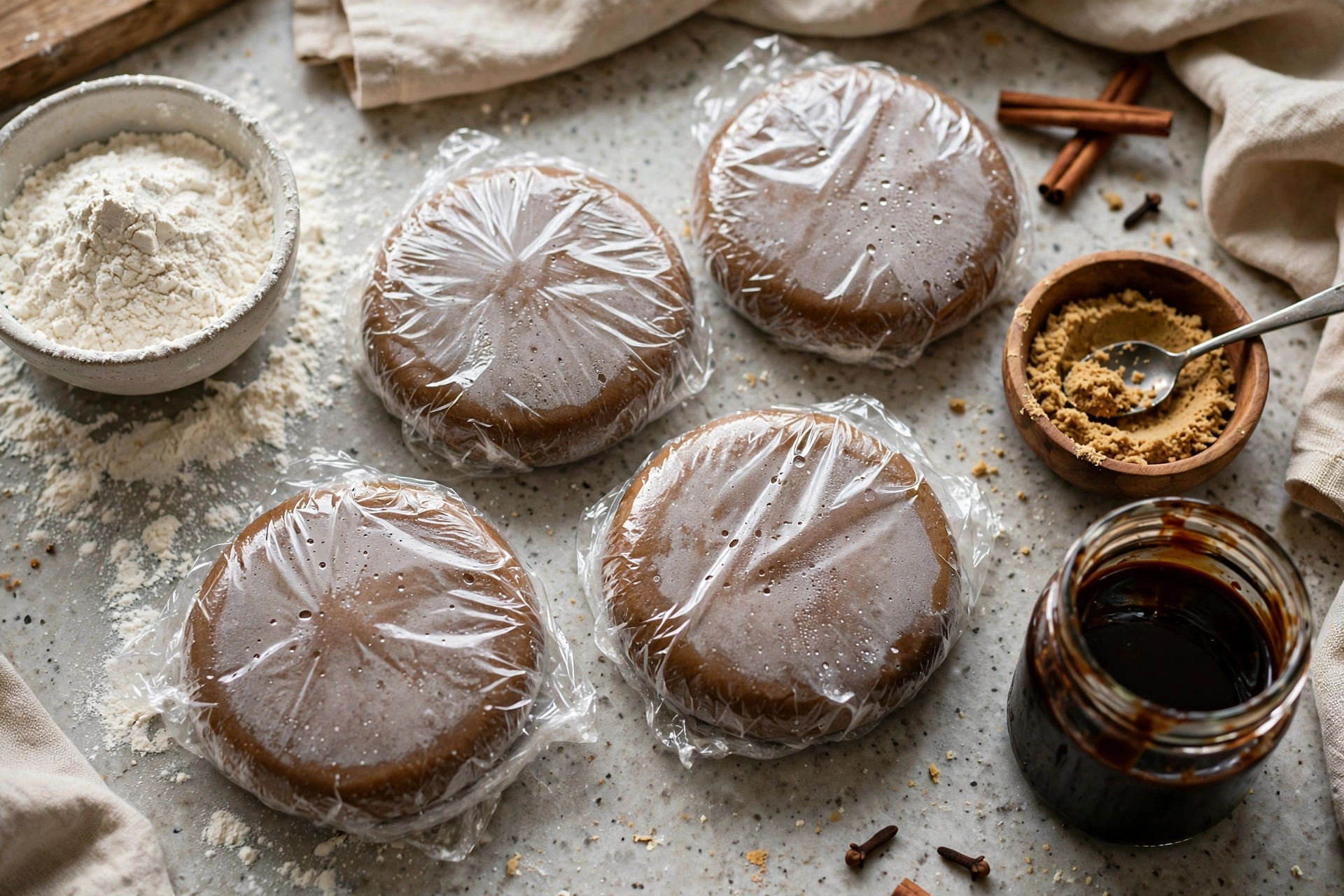
- Divide the dough in half, flatten each half into a disc, wrap tightly, and chill in the fridge for 60 minutes. Why this works: Cold butter firms up in the fridge, so the dough rolls cleanly and the shapes do not slump in the oven.
This step is the reason this gingerbread cookies recipe holds its shape.
Rolling and Cutting
- Roll the first disc on a lightly floured surface to 1/4 inch (6 mm) thick. Keep the second disc in the fridge while you work with the first. Why this works: Even thickness matters. Thin spots bake fast and turn hard, while thick spots stay raw in the center.
- Roll the second disc to the same thickness, cut shapes with cookie cutters, and place the shapes 2 inches (5 cm) apart on the lined baking sheets. Gather the scraps from each disc once to re-roll. Do not re-roll scraps more than once, as each re-roll warms the dough and toughens it.
- Chill both trays of cut shapes in the fridge for 15 minutes. During the last 10 minutes of this chill, preheat the oven to 350°F (175°C).
Quick Tip: If the dough sticks or feels soft while you roll, put it back in the fridge for 10 minutes. Adding a lot of extra flour will dry the cookies out.
At this point, this gingerbread cookies recipe is ready for the oven.
Baking and Cooling
- Bake the first tray for 12 minutes, until the edges look firm and set and the centers still look slightly soft. Why this works: Gingerbread firms up as it cools. Pulling the tray when the centers look slightly soft keeps the cookies soft after cooling. Waiting until they look fully baked in the oven makes hard cookies.
- Bake the second tray for 12 minutes in the same way, for a total Cook Time of 24 minutes.
- Cool the cookies on the tray for 5 minutes, then move them to a wire rack for 5 more minutes, for a total Cooling Time of 10 minutes.
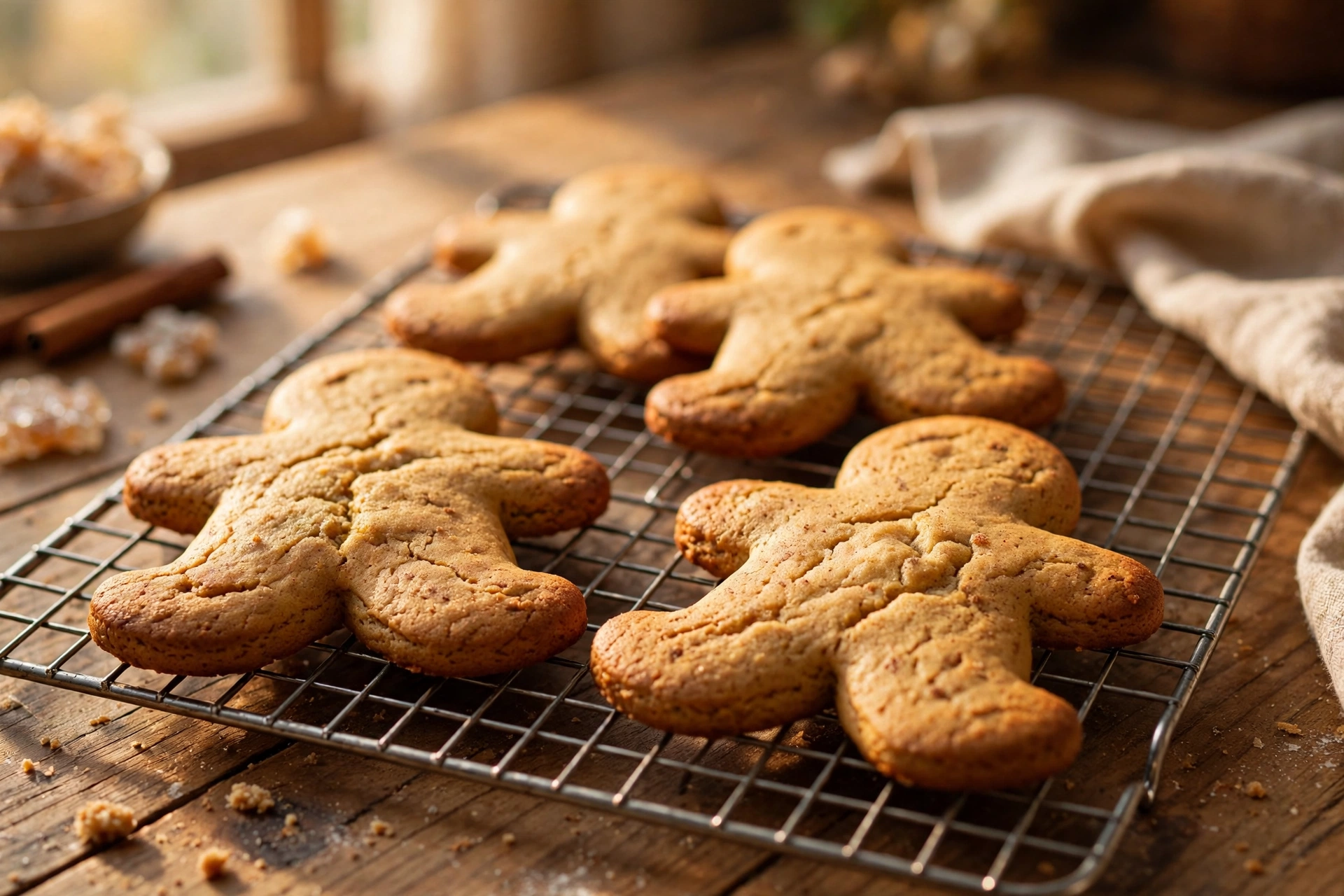
Quick Tip: Bake one tray at a time on the center rack. Two trays at once can bake unevenly, with the lower tray browning faster.
Common Mistakes and Troubleshooting
- Problem: Cookies spread and lose their shape. Why: The butter was too warm, or the cut shapes went into the oven without a second chill. Fix: Chill the dough for the full 60 minutes, chill cut shapes for 15 minutes on the trays, and use cool, pliable butter, not melted butter.
- Problem: Cookies turn hard after cooling. Why: They stayed in the oven too long. Fix: Pull the tray when the edges are firm and the centers still look slightly soft, then let the tray cool for 5 minutes before moving the cookies.
- Problem: Dough cracks when rolling. Why: The dough is too cold straight from the fridge, or it dried out from extra flour. Fix: Let a disc sit for 5 minutes at room temperature, then roll with light flour only, and re-chill if it gets soft.
Variations and Substitutions
These variations keep the base of this gingerbread cookies recipe the same, with only one change at a time.
- For crisp cookies, roll to 1/8 inch (3 mm) thick and bake 1 to 2 minutes longer per tray, watching the edges so they do not darken too much.
- For a spicier cookie, add 1/2 teaspoon extra ground ginger. Do not add extra cloves, as they quickly take over the flavor.
- For a simple finish, dip cooled cookies halfway in melted chocolate and let them set on parchment. This is optional and not part of the main recipe timing.
- For a gluten-free version, use a 1-to-1 gluten-free flour blend in the same amount. Chill the dough a little longer, as gluten-free dough softens faster.
- For a dairy-free version, use plant-based butter sticks, not soft spread, so the dough still holds its shape.
Allergen and Dietary Disclosure
Contains: gluten, dairy, egg.
- For gluten: use a 1-to-1 gluten-free flour blend as a substitute.
- For dairy: use plant-based butter sticks as a substitute.
- For egg: use 1 tablespoon ground flax mixed with 3 tablespoons water, rested for 5 minutes, as a substitute. This is a substitution suggestion only, not a guarantee that the recipe will suit a specific allergy.
Serving Suggestions
Serve cookies from this gingerbread cookies recipe with simple pairings that do not hide the spice.
- Serve with cold milk for kids and hot coffee for adults.
- Serve with hot chocolate on a cold evening.
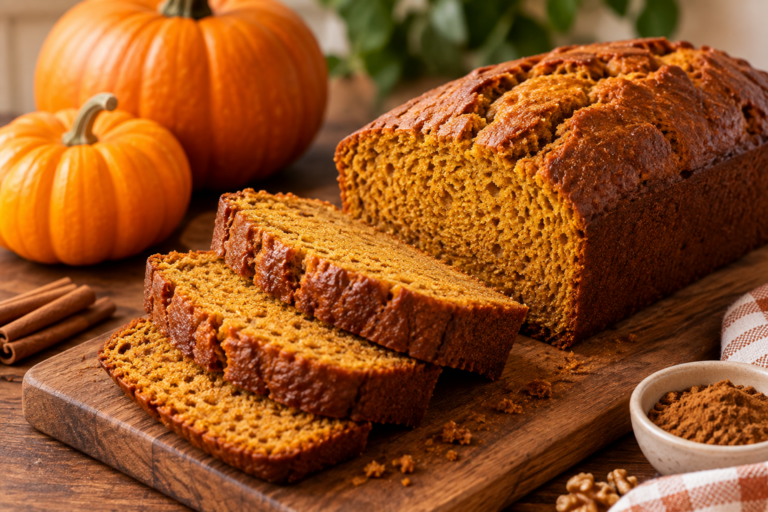
- Stack undecorated cookies in a gift box with parchment between layers, alongside slices of Best Pumpkin Bread for a holiday gift box.
- Crumble one cooled cookie over vanilla ice cream for a quick dessert topping.
Storage, Reheating, Freezing, Make-Ahead
Cookies from this gingerbread cookies recipe store well if they are cooled fully first.
- Store baked cookies in an airtight container at room temperature for up to 1 week.
- Keep the dough wrapped in the fridge for up to 3 days.
- Freeze dough discs, wrapped tightly, for up to 3 months. Thaw overnight in the fridge before rolling.
- Freeze baked, undecorated cookies for up to 2 months. Thaw at room temperature before serving or decorating.
- Do not reheat these cookies in the oven for a long time. If you want them warm, heat for 1 minute in a low oven, just until warm to the touch.
Nutrition Information
Per cookie (1 of 24 cookies): Calories: 140. Protein: 2 g. Carbohydrates: 22 g. Fat: 6 g. Fiber: 1 g. Sugar: 10 g. Sodium: 100 mg. Values are approximate and may vary based on exact ingredients and brands used.
Frequently Asked Questions
These questions cover the most common problems with this gingerbread cookies recipe.
Why did my gingerbread cookies spread and lose their shape?
Warm butter and warm dough cause most spreading. Chill the dough for 60 minutes, chill the cut shapes for 15 minutes on the trays, and check that the butter was cool and pliable, not melted, before mixing.
Can I make gingerbread cookies without molasses?
Yes, you can use the same amount of dark honey or maple syrup, but the flavor will be sweeter and less deep, and the cookies may spread slightly more. Molasses gives the classic color and spice depth, so the swap changes the taste more than the texture.
Can I freeze gingerbread cookie dough?
Yes. Wrap the dough discs tightly and freeze for up to 3 months, then thaw overnight in the fridge before rolling. Do not thaw at room temperature for a long time, as soft dough is hard to cut cleanly. This freezing step works well in this gingerbread cookies recipe.
How do I keep gingerbread cookies soft?
Pull the tray when the edges are firm and the centers still look slightly soft, then cool the cookies fully before storing them airtight. Overbaking is the main cause of hard cookies, since they firm up a lot as they cool.
Can I make these cookies gluten-free or dairy-free?
This recipe contains gluten, dairy, and egg. For gluten, use a 1-to-1 gluten-free flour blend. For dairy, use plant-based butter sticks, not soft spread. For egg, use the flax substitute given in the allergen section. These are substitution suggestions only, not a guarantee for a specific allergy.
How do I know when gingerbread cookies are done?
Bake each tray for 12 minutes at 350°F (175°C), for a total Cook Time of 24 minutes across two trays. The edges should look firm and set, while the centers still look slightly soft. That soft center firms up during the 10 minutes of cooling.
If you bake these, leave a rating and tell me in the comments which shape you cut first.
Conclusion
This gingerbread cookies recipe works because it treats temperature as part of the recipe, not an afterthought. Cold dough, even rolling, and an early pull from the oven give you cookies that look like the shapes you cut and taste warmly spiced days later. If you follow the chill times in this gingerbread cookies recipe, the shapes stay sharp.
Soft Gingerbread Cookies Recipe (24 Perfect Cut-Outs)
Ingredients
Method
- Whisk flour, ginger, cinnamon, cloves, baking soda, and salt.
- Beat butter and brown sugar for 2 to 3 minutes until pale and fluffy.
- Add molasses, egg, and vanilla, and beat until combined. Wash hands after handling raw egg.
- Add dry ingredients in two parts and mix just until a dough forms.
- Divide into two discs, wrap, and chill for 60 minutes.
- Roll the first disc to 1/4 inch (6 mm) thick and cut shapes. Roll the second disc the same way and cut shapes.
- Chill both trays of cut shapes for 15 minutes. Preheat the oven during the last 10 minutes of this chill to 350°F (175°C).
- Bake each tray for 12 minutes, for a total Cook Time of 24 minutes, until edges are firm and centers look slightly soft.
- Cool on the tray for 5 minutes, then on a wire rack for 5 more minutes, for a total Cooling Time of 10 minutes.