Simple Foolproof Tomato Soup Recipe That Turns Pantry Staples Into Pure Comfort (35 Min)
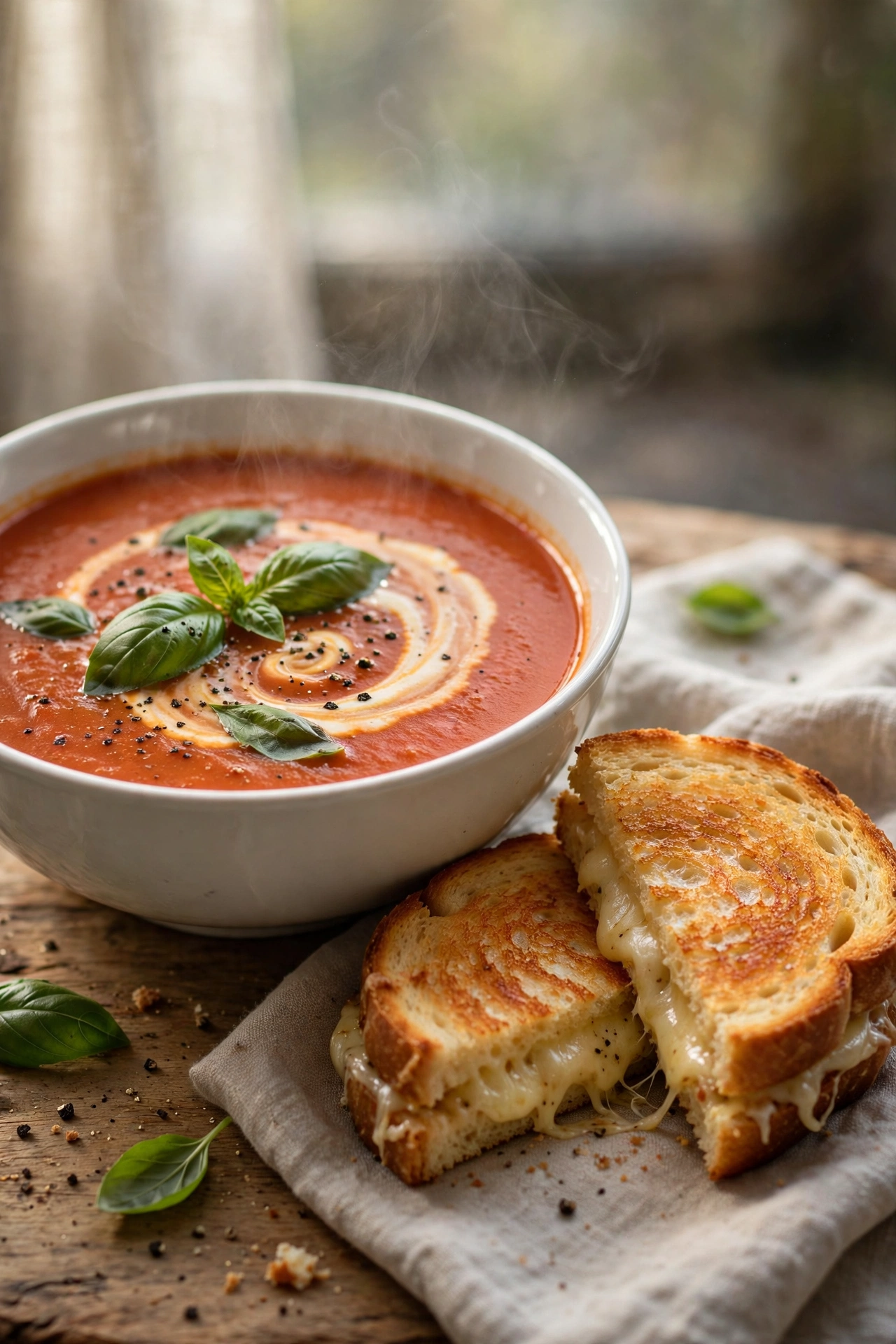
This tomato soup is the one I make when it’s cold out, the fridge is nearly bare, and I still want a real dinner. A can of good tomatoes, an onion, some garlic, and about 35 minutes turn into a silky, savory soup that tastes far better than anything from a carton.
The secrets are small. Cook the tomato paste until it darkens, add a pinch of sugar to balance the acidity, and stir in a little cream at the end. That’s what takes it from thin and sharp to rich and round.
Why You’ll Love This Tomato Soup
This tomato soup earns a regular place on the menu for a few clear reasons.
- Pantry-friendly. Canned tomatoes, an onion, garlic, and broth are all you need to start.
- Silky smooth. A quick blend gives a velvety texture without any flour or roux.
- Balanced flavor. Caramelized tomato paste and a pinch of sugar cut the sharp acidity.
- One pot. Everything cooks in the same pot you blend in or with an immersion blender.
- Made for dipping. It’s a natural match for grilled cheese or warm, crusty bread.
Recipe Snapshot
- Servings: 4 servings (about 1 1/2 cups each)
- Difficulty: Easy
- Cuisine/Course: American, Soup / Starter
- Prep Time: 10 minutes
- Cook Time: 25 minutes
- Total Time: 35 minutes
How do you make tomato soup less acidic? Tomato soup tastes less acidic when you cook the tomato paste until it darkens, add a small pinch of sugar, and finish with butter or cream, since the fat and sweetness balance the natural tartness of canned tomatoes without making the soup taste sweet.
Ingredients
For the Soup
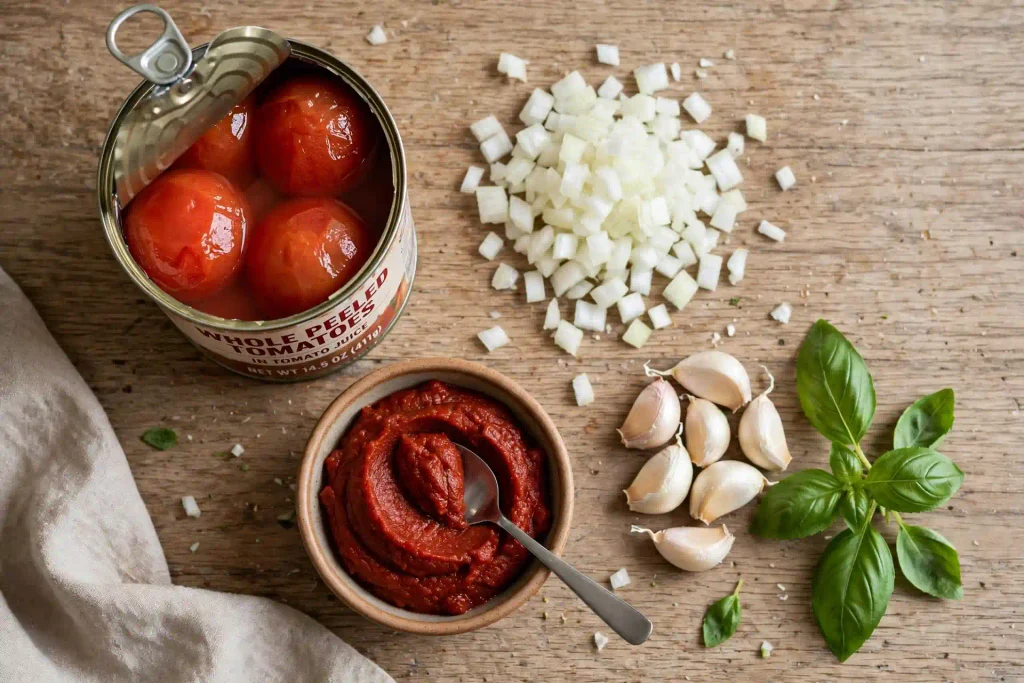
- 2 tbsp olive oil
- 1 tbsp unsalted butter
- 1 medium yellow onion, diced
- 3 garlic cloves, minced
- 2 tbsp tomato paste
- 1 can (28 oz / 800 g) whole peeled tomatoes, with their juices
- 2 cups (475 ml) vegetable or chicken broth
- 1 tsp granulated sugar (balances acidity; add a little more if your tomatoes taste sharp)
- 1 tsp dried basil, or 1/4 cup fresh basil leaves
- 1/2 tsp salt, plus more to taste
- 1/4 tsp black pepper
- 1/2 cup (120 ml) heavy cream or half-and-half (optional; coconut milk works for a dairy-free version)
- Pinch of red pepper flakes, optional
To Serve
- Fresh basil or parsley, chopped
- A drizzle of olive oil
- Grilled cheese sandwiches or toasted bread
Recipe Timing
- Prep Time: 10 minutes
- Cook Time: 25 minutes
- Rest Time: none required
- Total Time: 35 minutes
Equipment
- Immersion blender or countertop blender (makes the soup smooth and velvety; an immersion blender is the safest and easiest way to blend hot soup)
- Large pot or Dutch oven
Before You Start
- Dice the onion and mince the garlic before you start cooking, since the early steps move quickly.
- Open the can of tomatoes and keep the juices, which are part of the soup.
- If you’re using a countertop blender, plan to blend in batches, since hot soup expands.
How to Make Tomato Soup
Building the Base
- Heat the olive oil and butter in a large pot over medium heat. Add the onion and cook for 5 to 6 minutes, stirring occasionally, until soft and translucent but not browned.
- Add the garlic and tomato paste, and cook for 2 minutes, stirring constantly, until the paste turns a deeper brick red. Why this works: cooking the tomato paste in fat caramelizes its sugars and removes the raw, tinny taste, which gives the soup more depth.
Simmering the Soup
- Add the tomatoes with their juices, breaking them up with a spoon. Stir in the broth, sugar, basil, salt, pepper, and red pepper flakes, if using.
- Bring to a boil, then reduce the heat to a gentle simmer and cook for 15 minutes, stirring now and then, until the tomatoes are very soft and the flavors have blended.
Blending
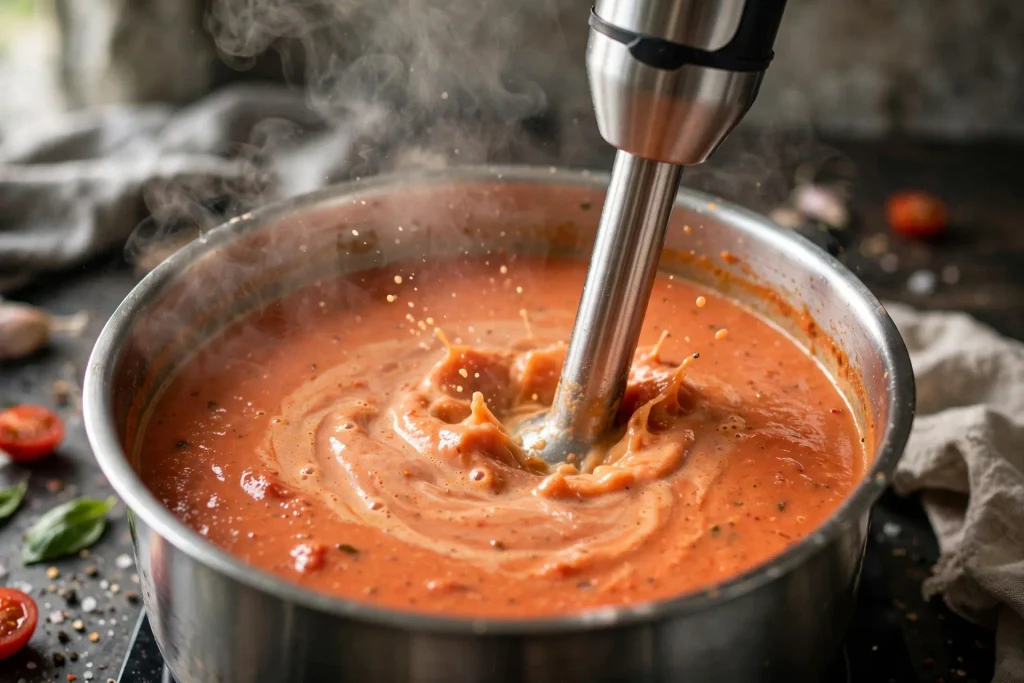
- Turn off the heat. Blend the soup with an immersion blender until completely smooth.
- If you’re using a countertop blender, let the soup cool for 5 minutes first, then blend in small batches with the lid vented and a towel over the top, filling the blender no more than halfway. Why this works: hot liquid expands as it blends, and a sealed, overfilled blender can blow the lid off and cause burns.
Finishing
- Return the pot to low heat and stir in the cream. Warm gently for 1 to 2 minutes, without letting it boil.
- Taste and adjust the salt, and add another pinch of sugar if the soup tastes sharp.
💡 Quick Tip: Taste before you add the cream. If the soup tastes too acidic, a pinch more sugar or a small cube of butter will round it out better than extra salt.
Serving
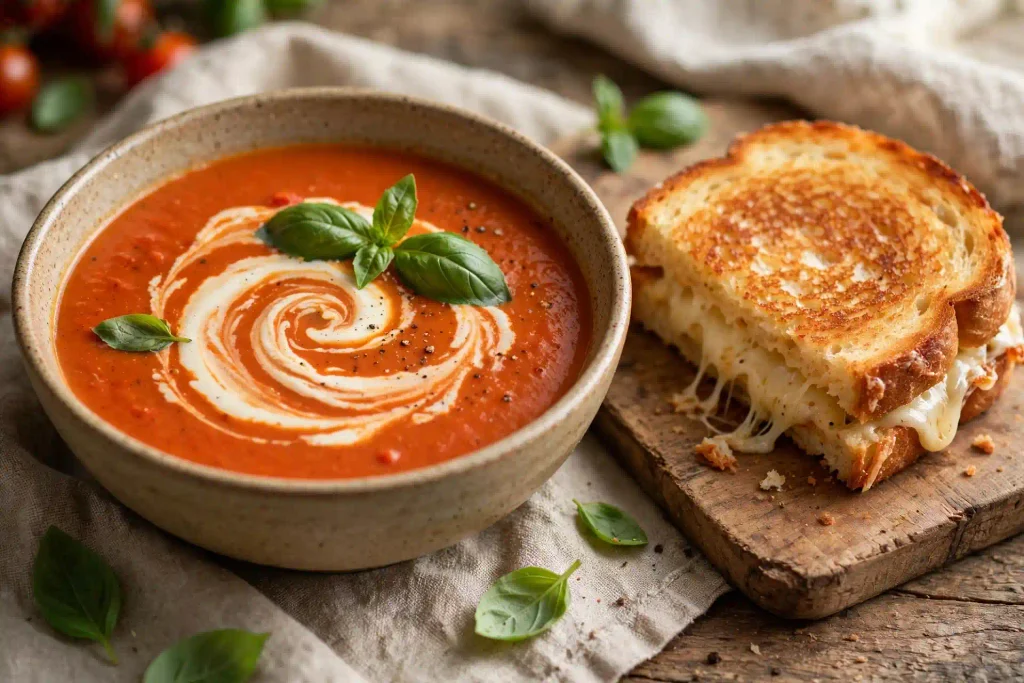
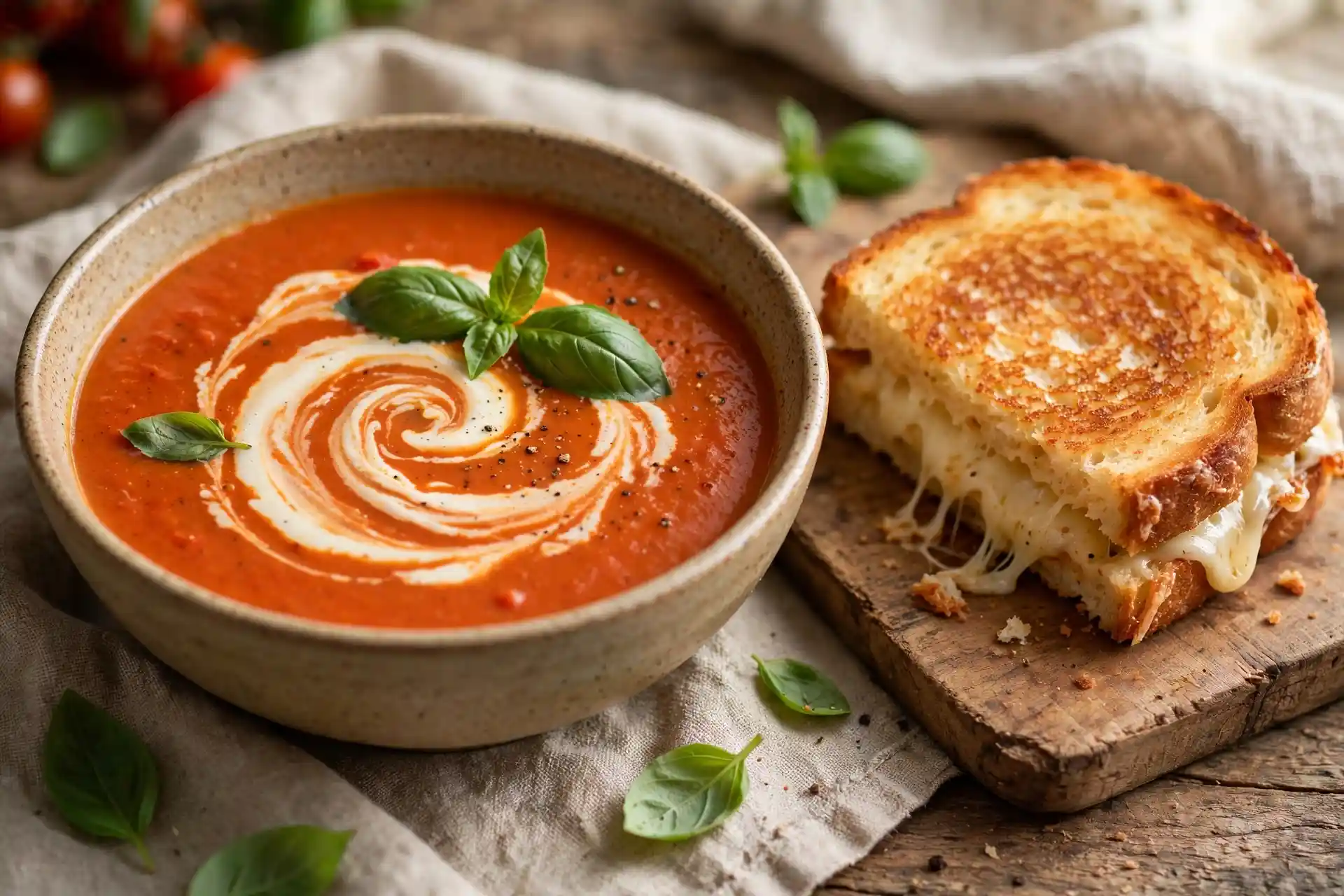
- Ladle into bowls and top with fresh basil, a drizzle of olive oil, and black pepper. Serve with grilled cheese or toasted bread.
Common Mistakes and Troubleshooting
Problem: The soup tastes sharp or acidic. Why: Canned tomatoes vary in acidity, and the tomato paste may not have cooked long enough. Fix: Cook the paste until it darkens, add a pinch of sugar, and finish with a little butter or cream.
Problem: The soup is thin and watery. Why: It didn’t simmer long enough, or there’s too much broth. Fix: Simmer uncovered for a few more minutes before blending, or use a little less broth next time.
Problem: The soup is grainy or has bits of skin. Why: The tomatoes weren’t blended long enough. Fix: Blend for a full minute or two, or press the soup through a fine-mesh strainer for a restaurant-smooth finish.
Problem: The cream curdles or looks split. Why: The soup was boiling when the cream went in, or the cream was very cold. Fix: Take the pot off the boil, use room-temperature cream, and warm the soup gently.
Variations and Substitutions
- Roasted tomato soup: Roast 2 lbs of halved fresh tomatoes with the onion and garlic at 400°F (200°C) for about 35 minutes, then blend with the broth. This adds time to the recipe.
- Dairy-free version: Replace the butter with more olive oil and the cream with canned coconut milk, or leave the cream out for a lighter soup.
- Smoky version: Add 1/2 teaspoon of smoked paprika with the tomato paste.
- Chunky version: Blend only half of the soup, then stir it back into the pot for a more rustic texture.
Allergen Information
Contains: dairy.
- For a dairy-free version, follow the dairy-free variation above.
- Check the label on your broth, since some brands contain gluten, soy, or other additives that vary by product. If you serve it with grilled cheese or croutons, the bread adds gluten and dairy.
- This recipe does not contain egg, nuts, or shellfish as written. This information reflects the recipe as written and does not guarantee safety for your specific dietary needs or kitchen environment.
What to Serve With Tomato Soup
- A classic grilled cheese sandwich
- Garlic breadsticks or knots made from my homemade pizza dough, which are perfect for dunking
- A simple green salad with a light vinaigrette
- Crispy croutons or a handful of oyster crackers
Storage, Reheating, Freezing, and Make-Ahead
- Refrigerator: Cool the soup within 2 hours, then store in an airtight container for up to 4 days.
- Reheating: Warm gently on the stovetop over medium-low heat, stirring often, with a splash of broth or water if it has thickened. Heat until steaming hot.
- Freezer: Freeze in airtight containers for up to 3 months. For the best texture, freeze the soup before adding the cream, then stir the cream in after reheating.
- Make-ahead: The soup tastes even better the next day. Make it through the blending step, refrigerate, then add the cream when you reheat.
Nutrition Information (Per Serving, Based on 4 Servings, With Cream, Without Toppings)
- Calories: 240
- Protein: 4 g
- Carbohydrates: 15 g
- Fat: 20 g
- Fiber: 4 g
- Sugar: 9 g
- Sodium: 780 mg
Values are approximate and may vary based on exact ingredients and brands used.
Frequently Asked Questions
Can I make tomato soup ahead of time? Yes, it keeps well in the fridge for up to 4 days and tastes even better the next day. Add the cream when you reheat it for the best texture.
Why does my tomato soup taste acidic or bitter? Canned tomatoes can be quite acidic. Cook the tomato paste until it darkens, add a pinch of sugar, and finish with butter or cream to balance it.
Can I use fresh tomatoes instead of canned? Yes, but ripe, flavorful tomatoes are key. Roast them first with the onion and garlic for a deeper flavor, or use canned tomatoes when fresh ones are out of season.
How do I make tomato soup creamy without cream? Blend the soup well, add an extra tablespoon of olive oil or butter, or stir in a little coconut milk. A small peeled potato simmered with the soup also adds body.
Can I freeze tomato soup? Yes, for up to 3 months. Freeze it without the cream and stir the cream in after reheating, since dairy can separate when frozen.
Is it safe to blend hot soup in a regular blender? Yes, with care. Let the soup cool for a few minutes, fill the blender no more than halfway, vent the lid, cover it with a towel, and blend in batches. An immersion blender avoids the problem altogether.
If you make this one, I’d love to hear how it turned out. Leaving a star rating or a quick comment below genuinely helps other home cooks find this recipe.
Final Thoughts
This tomato soup shows that a few pantry staples, a little patience with the tomato paste, and a quick blend can beat any boxed version. Make a pot, grab a grilled cheese, and you have comfort on the table in about half an hour.
Simple Foolproof Tomato Soup Recipe That Turns Pantry Staples Into Pure Comfort (35 Min)
Ingredients
Equipment
Method
- Building the Base
- Heat oil and butter; cook onion 5 to 6 minutes until soft.
- Add garlic and tomato paste; cook 2 minutes until the paste darkens.
- Simmering the Soup 3. Add tomatoes, broth, sugar, basil, salt, pepper, and red pepper flakes. 4. Simmer gently 15 minutes until the tomatoes are very soft.
- Blending 5. Blend with an immersion blender until smooth. 6. If using a countertop blender, cool 5 minutes and blend in small batches with the lid vented.
- Finishing 7. Stir in cream over low heat, 1 to 2 minutes; do not boil. 8. Adjust salt and sugar.
- Serving 9. Top with basil, olive oil, and pepper; serve with grilled cheese or bread.
- Nutrition (per serving, with cream): Calories: 240 | Protein: 4 g | Carbohydrates: 15 g | Fat: 20 g | Fiber: 4 g | Sugar: 9 g | Sodium: 780 mg