Classic Buttery Shortbread Cookies That Melt in Your Mouth (60 Min)
These shortbread cookies are proof that a short ingredient list doesn’t mean a short amount of flavor. Butter, sugar, flour, and salt—that’s genuinely it, and the result is a cookie that’s crisp at the edges and tender enough to melt the moment it hits your tongue.
The biggest difference here is chilling the dough before baking. It keeps the cookies from spreading too thin in the oven, so they hold their shape and stay wonderfully short and crumbly.
Why You’ll Love These Shortbread Cookies
These shortbread cookies are worth keeping in your regular baking rotation for a few reasons.
- Just four ingredients. Butter, sugar, flour, and salt are likely already in your pantry.
- Genuinely buttery flavor. With nothing to compete with it, the butter is the star here.
- Simple technique. No mixer required, just a bowl and a bit of patience while the dough chills.
- Make-ahead friendly. The dough keeps well in the fridge or freezer, ready whenever a craving hits.
- Endlessly adaptable. Dip them in chocolate, add citrus zest, or keep them completely plain.
Recipe Snapshot
- Servings: 16 cookies
- Difficulty: Easy
- Cuisine/Course: Scottish, Dessert/Snack
- Prep Time: 15 minutes
- Chill Time: 30 minutes
- Cook Time: 15 minutes
- Total Time: 60 minutes
Why do shortbread cookies need to be chilled before baking? Shortbread cookies are chilled before baking because the dough is mostly butter, and cold butter holds its shape in the oven instead of melting and spreading, which keeps these cookies thick and short rather than thin and greasy.
Ingredients
For the Shortbread
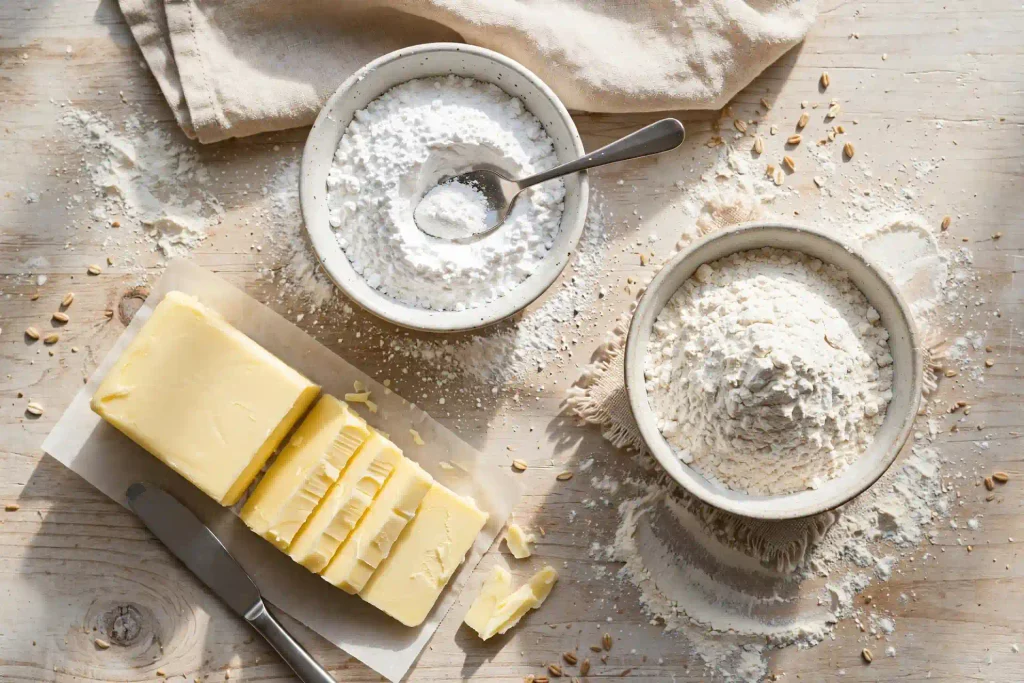
- 1 cup (225 g) unsalted butter, softened but still cool
- 1/2 cup (60 g) powdered sugar
- 2 cups (250 g) all-purpose flour
- 1/4 tsp salt
- 1/2 tsp vanilla extract, optional
Recipe Timing
- Prep Time: 15 minutes
- Chill Time: 30 minutes
- Cook Time: 15 minutes
- Total Time: 60 minutes
Before You Start
- Let the butter sit out just long enough to soften slightly; it should still feel cool, not warm or greasy.
- Line a baking sheet with parchment paper before you start mixing, since the dough comes together quickly.
- Clear space in the fridge for the dough to chill, since this step isn’t optional for the right texture.
How to Make Shortbread Cookies
Mixing the Dough
- In a large bowl, beat the butter and powdered sugar together until smooth and creamy, about 2 minutes.
- Add the vanilla, if using, and mix to combine.
- Add the flour and salt, mixing on low speed or stirring by hand just until the dough comes together. Why this works: overmixing once the flour goes in develops gluten, which can make shortbread tough instead of tender, so stop as soon as no dry flour remains.
Shaping and Chilling
- Turn the dough out onto a lightly floured surface and shape it into a disc, or press it into a lined 8-inch square pan for bar-style shortbread.
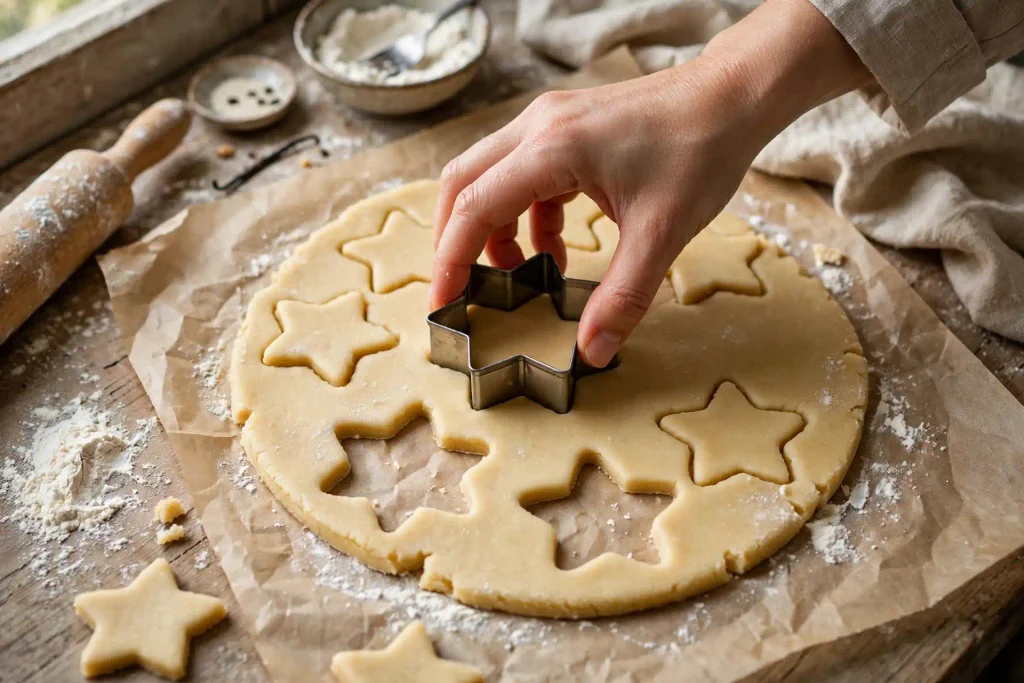
- If rolling for cut-out cookies, roll the dough to about 1/2-inch thickness between two sheets of parchment paper.
- Wrap the dough and refrigerate for at least 30 minutes until firm. Why this works: chilling solidifies the butter again after warming it slightly, which is what keeps the cookies from spreading too much once they hit the oven.
💡 Quick Tip: If the dough feels too soft to work with even after chilling, pop it back in the freezer for 10 minutes before cutting or shaping further.
Baking
- Preheat the oven to 325°F (165°C). Cut the chilled dough into cookies or bars and arrange them on the lined baking sheet, spacing them about 1 inch apart.
- Prick each cookie a few times with a fork, which is traditional and also helps them bake evenly.
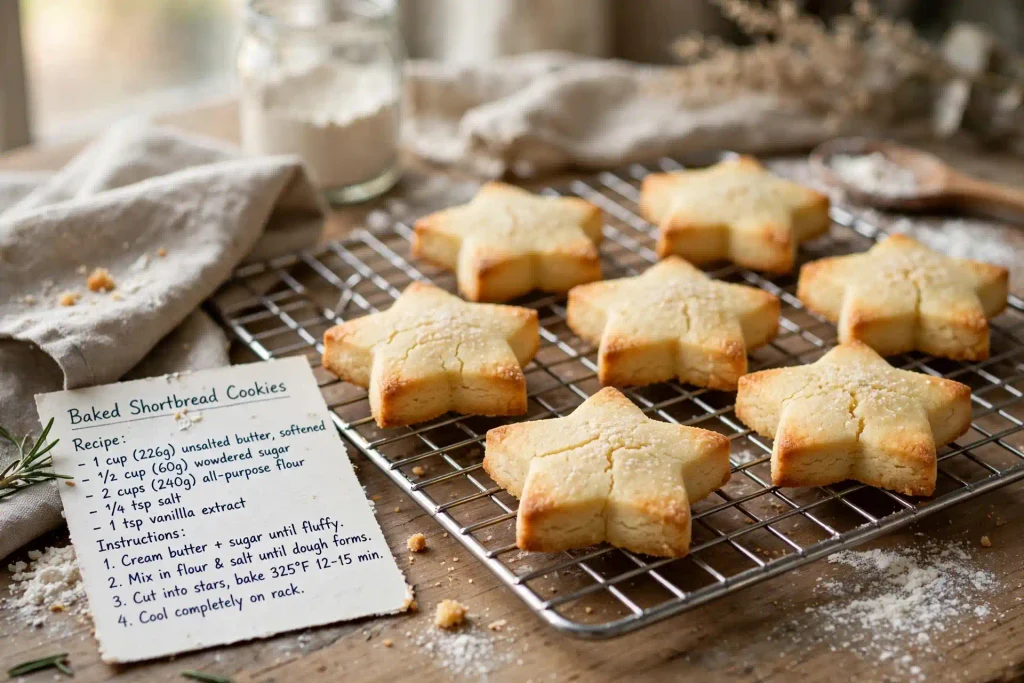
- Bake for 15 to 18 minutes, until the edges turn very lightly golden. Shortbread shouldn’t brown much, so watch closely near the end.
Cooling
- Let the cookies cool on the baking sheet for 5 minutes, then transfer to a wire rack to cool completely.

Common Mistakes and Troubleshooting
Problem: The cookies spread too much and lose their shape. Why: The dough wasn’t chilled long enough, or the butter was too soft when it went into the oven. Fix: Chill the dough for the full 30 minutes, and if your kitchen is warm, chill the cut cookies for an extra 10 minutes before baking.
Problem: The cookies turn out tough instead of tender. Why: The dough was overmixed once the flour was added, developing too much gluten. Fix: Mix just until the dough comes together and no dry flour remains, stopping as soon as possible.
Problem: The edges brown too much. Why: The oven ran hot, or the cookies baked a few minutes too long. Fix: Start checking at the 15-minute mark, and pull the cookies as soon as the edges turn just barely golden.
Variations and Substitutions
- Chocolate-dipped: Dip half of each cooled cookie in melted chocolate and let set on parchment paper.
- Citrus shortbread: Add 1 tablespoon of lemon or orange zest to the dough along with the butter and sugar.
- Brown sugar version: Replace half the powdered sugar with brown sugar for a slightly deeper, caramel-like flavor.
- Spiced shortbread: Add 1/2 teaspoon ground cinnamon or cardamom to the flour for a warm, spiced twist.
Allergen Information
Contains: dairy, gluten.
- For a dairy-free version, substitute the butter with a plant-based alternative; the texture may be slightly different from the original.
- For a gluten-free version, substitute the flour with a 1:1 gluten-free baking blend, though shortbread’s texture depends heavily on gluten structure, so results will vary.
- This recipe does not contain egg, nuts, soy, or shellfish as written. This information reflects the recipe as written and does not guarantee safety for your specific dietary needs or kitchen environment.
What to Serve With Shortbread Cookies
- A cup of tea or coffee for an afternoon treat
- A scoop of vanilla ice cream, crumbled over the top
- A holiday cookie platter alongside other baked treats
- A drizzle of melted chocolate or a dusting of powdered sugar
Storage, Freezing, and Make-Ahead
- Room temperature: Store in an airtight container for up to 1 week.
- Freezer (baked): Freeze baked cookies in an airtight container for up to 3 months.
- Freezer (dough): The raw dough disc or log freezes well for up to 3 months; thaw in the refrigerator before slicing and baking.
- Make-ahead: The dough can be made up to 3 days ahead and kept refrigerated, ready to bake whenever you want fresh cookies.
Nutrition Information (Per Cookie, Based on 16 Cookies)
- Calories: 140
- Protein: 1 g
- Carbohydrates: 13 g
- Fat: 9 g
- Fiber: 0 g
- Sugar: 4 g
- Sodium: 40 mg
Values are approximate and may vary based on exact ingredients and brands used.
Visit also
Frequently Asked Questions
Can I make shortbread cookie dough ahead of time? Yes, the dough keeps well in the refrigerator for up to 3 days or in the freezer for up to 3 months, making it an easy make-ahead treat.
Why did my shortbread cookies spread out flat? This almost always means the dough wasn’t chilled enough before baking. Make sure it’s firm to the touch, and chill the cut cookies a bit longer if your kitchen is warm.
Can I use salted butter instead of unsalted? Yes, just leave out the additional salt in the recipe, or reduce it to a pinch, since salted butter already contains some.
How do I know when shortbread cookies are done? They’re ready when the edges turn just barely golden, usually around 15 to 18 minutes. Shortbread shouldn’t brown significantly like other cookies.
Can I freeze shortbread cookie dough? Yes, the raw dough freezes well for up to 3 months. Thaw it in the refrigerator before slicing or cutting and baking as usual.
Why do you poke holes in shortbread cookies? Pricking the dough with a fork is a traditional step that helps steam escape evenly as the cookies bake, which helps keep them flat and evenly textured.
If you make this one, I’d love to hear how it turned out. Leaving a star rating or a quick comment below genuinely helps other home cooks find this recipe.
Final Thoughts
These shortbread cookies show just how far butter, sugar, and flour can go when nothing is rushed. A little patience while the dough chills is really all that stands between you and a cookie that’s crisp, tender, and genuinely hard to stop eating.

Classic Buttery Shortbread Cookies That Melt in Your Mouth (60 Min)
Ingredients
Method
- Mixing the Dough
- Beat butter and powdered sugar until smooth, about 2 minutes.
- Add vanilla if using.
- Mix in flour and salt just until combined.
- Shaping and Chilling 4. Shape dough into a disc or press into a lined 8-inch pan. 5. Roll to 1/2-inch thickness if cutting shapes. 6. Wrap and refrigerate at least 30 minutes until firm.
- Baking 7. Preheat oven to 325°F (165°C); cut and arrange cookies on a lined sheet, 1 inch apart. 8. Prick each cookie with a fork. 9. Bake 15 to 18 minutes until edges are lightly golden.
- Cooling 10. Cool on the sheet 5 minutes, then transfer to a wire rack.
- Nutrition (per cookie): Calories: 140 | Protein: 1 g | Carbohydrates: 13 g | Fat: 9 g | Fiber: 0 g | Sugar: 4 g | Sodium: 40 mg