Foolproof Pizza Dough Recipe (Homemade, 105 Min)
This homemade pizza dough recipe replaced my habit of buying pre-made dough the first time I realized how little hands-on effort it actually takes. Most of the time here is the dough rising on its own, not you standing at the counter working it.
What makes this dough worth the wait is the texture once it’s baked: a little chewy in the middle, with edges that puff up and turn golden and slightly crisp. It works equally well for a classic round pizza or stretched out for a sheet-pan version.
Why You’ll Love This Homemade Pizza Dough Recipe
This homemade pizza dough recipe is worth making from scratch for a few reasons.
- Minimal hands-on time. Most of the process is hands-off rising, not active kneading.
- No stand mixer required. This comes together by hand with just a bowl and a spoon.
- Freezes well. Make a double batch and freeze half for an easy future pizza night.
- Versatile base. Works for thin crust, a thicker pan pizza, or even breadsticks.
- Genuinely better texture than store-bought. A short rise time develops real flavor and chew that pre-made dough often lacks.
Recipe Snapshot
- Servings: 2 pizza crusts (about 12 inches each), or one large sheet-pan pizza
- Difficulty: Easy
- Cuisine/Course: Italian-American, Base/Component Recipe
- Prep Time: 15 minutes
- Rise Time: 90 minutes
- Total Time: 105 minutes
Note: This recipe covers the dough itself, not a fully baked pizza. Baking time will vary depending on your toppings, oven, and crust thickness, typically 10 to 12 minutes at 475°F (245°C) for a classic thin-crust pizza, so it isn’t included in the total time above.
What makes homemade pizza dough chewy instead of tough? Homemade pizza dough gets its chewy texture from developing gluten through kneading, then giving the dough enough time to rise slowly, which relaxes the gluten and builds flavor without making the crust dense or tough.
Ingredients
For the Dough
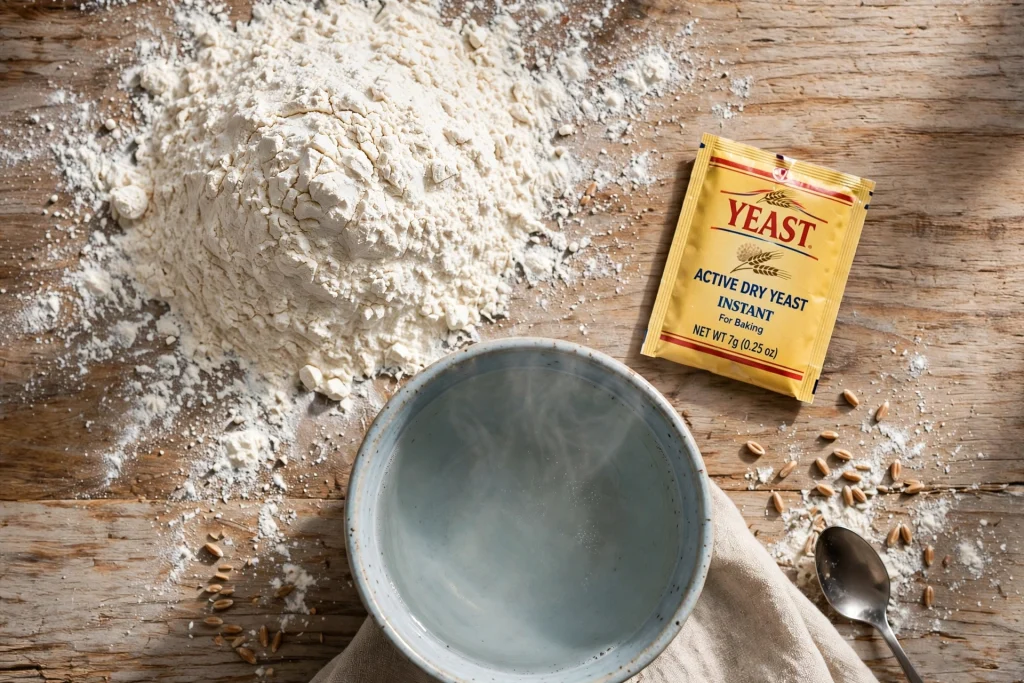
- 3 1/4 cups (400 g) bread flour, plus more for dusting (bread flour’s higher protein content gives a chewier crust; all-purpose flour works too, with a slightly softer texture)
- 1 packet (2 1/4 tsp) instant yeast
- 1 tsp granulated sugar (helps activate the yeast)
- 1 1/2 tsp salt
- 1 1/4 cups (300 ml) warm water (about 105°F to 110°F, warm to the touch but not hot; water that’s too hot can kill the yeast)
- 2 tbsp olive oil, plus more for greasing the bowl
Recipe Timing
- Prep Time: 15 minutes
- Rise Time: 90 minutes
- Total Time: 105 minutes
Before You Start
- Check that your yeast is fresh, especially if it’s been sitting in the pantry a while, since expired yeast won’t rise properly.
- Have a large mixing bowl and a clean, lightly floured surface ready before you start kneading.
- Clear a warm, draft-free spot in your kitchen for the dough to rise, such as an oven with just the light on.
How to Make Homemade Pizza Dough
Mixing the Dough
- In a large bowl, whisk together the flour, instant yeast, sugar, and salt.
- Make a well in the center and pour in the warm water and olive oil.
- Stir with a wooden spoon or spatula until a shaggy dough forms, and there’s no more dry flour visible.
Kneading
- Turn the dough out onto a lightly floured surface and knead for 8 to 10 minutes until it becomes smooth and elastic. Why this works: kneading develops the gluten strands in the flour, which is what gives the finished crust its chewy structure instead of a crumbly one.
- The dough is ready when you can stretch a small piece thin enough to see light through it without it tearing immediately, a sign the gluten has developed enough.
Rising
- Lightly grease a clean bowl with olive oil, place the dough inside, and turn it once to coat.
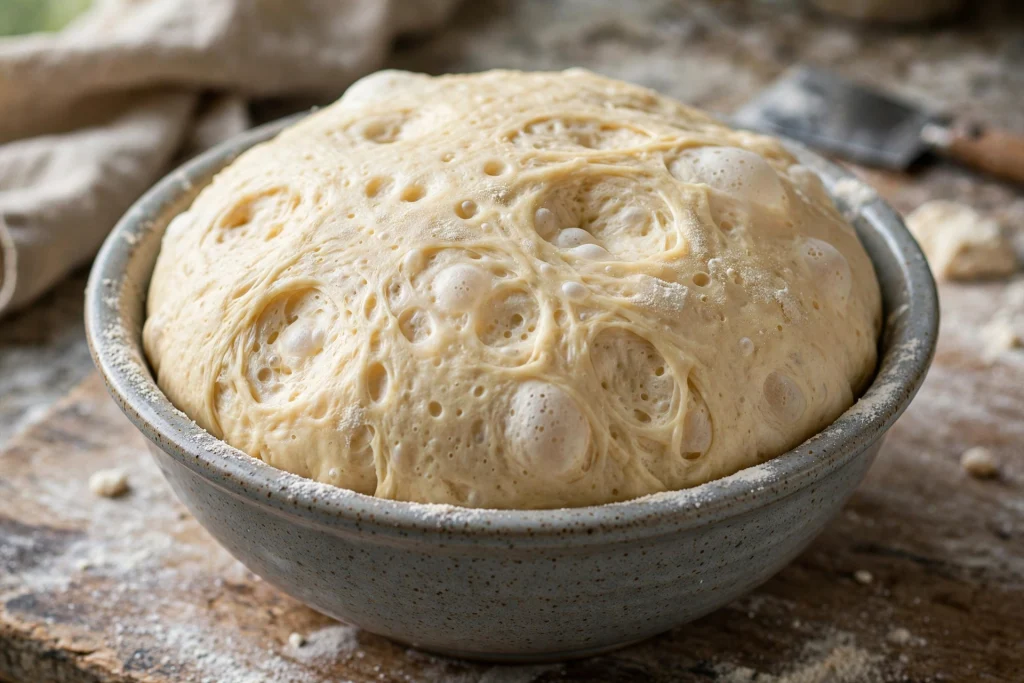
- Cover with plastic wrap or a damp towel and let rise in a warm spot for about 90 minutes until doubled in size.
💡 Quick Tip: If your kitchen is on the cooler side, the rise may take closer to 2 hours. Judge by the dough’s size rather than the clock.
Shaping
- Punch down the risen dough gently to release the air, then divide it in half for two 12-inch pizzas.
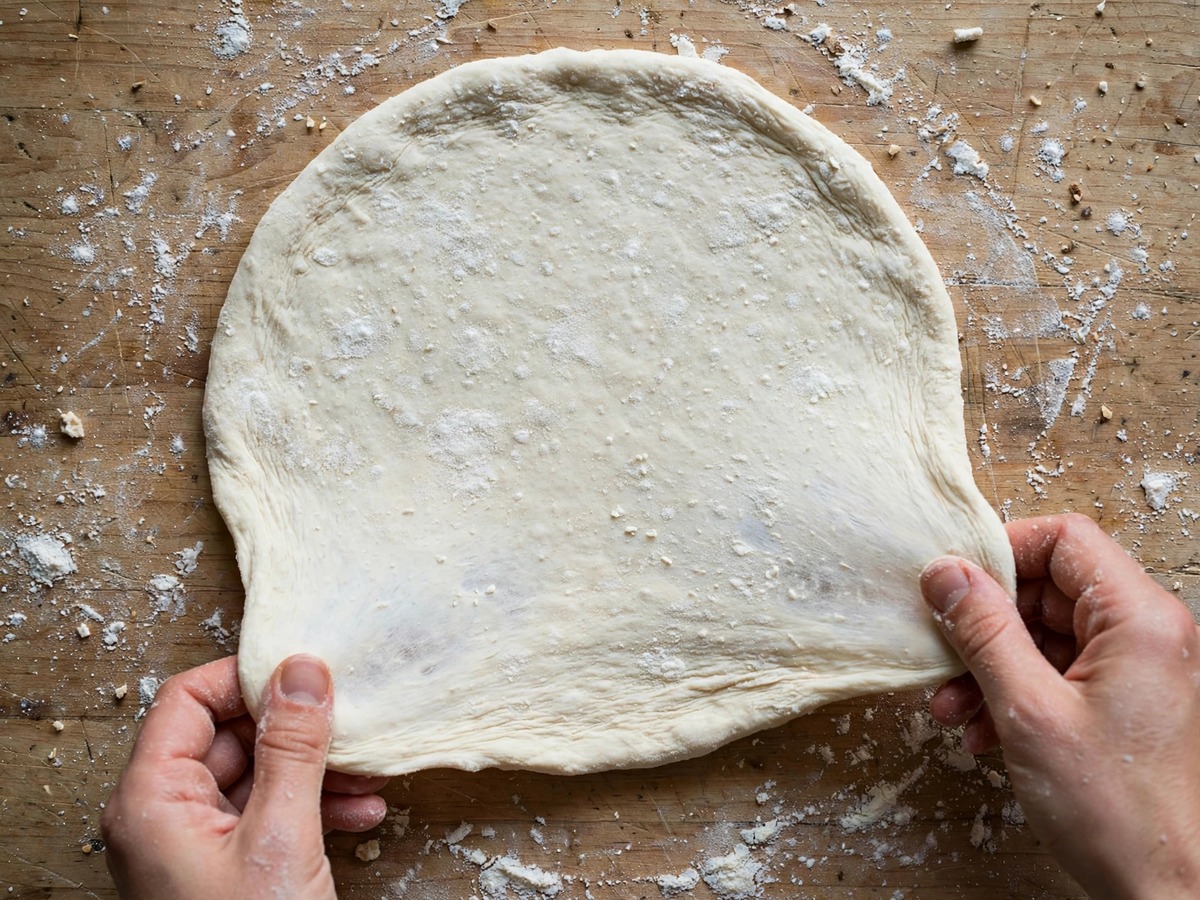
- On a floured surface, stretch or roll each portion into your desired shape, working from the center outward and leaving the edges slightly thicker for a puffier crust.
Common Mistakes and Troubleshooting
Problem: The dough doesn’t rise. Why: The yeast may have been expired, or the water used to activate it was too hot and killed it. Fix: Check your yeast’s expiration date before starting, and make sure the water is warm to the touch, not hot, around 105°F to 110°F (40°C to 43°C).
Problem: The dough tears easily when stretching. Why: It wasn’t kneaded long enough to develop the gluten, or it wasn’t given enough time to rest and relax before shaping. Fix: Knead for the full 8 to 10 minutes, and if the dough is fighting back while stretching, let it rest for 5 minutes before trying again.
Problem: The finished crust turns out dense instead of chewy. Why: The dough didn’t get enough rise time, so it never developed the air pockets that give pizza crust its texture. Fix: Let the dough fully double in size before shaping, even if that takes longer than 90 minutes in a cooler kitchen.
Variations and Substitutions
- Whole wheat version: Substitute up to half the bread flour with whole wheat flour for a heartier, nuttier crust; using all whole wheat will make the dough denser.
- Garlic herb dough: Knead in 1 teaspoon garlic powder and 1 teaspoon dried Italian herbs along with the dry ingredients.
- Overnight cold rise: After the initial rise, refrigerate the dough for up to 24 hours for a slower fermentation and deeper flavor; let it come to room temperature for about 30 minutes before shaping.
- Thin-crust version: Roll the dough thinner than usual and dock it with a fork before topping to prevent large air bubbles during baking.
Allergen Information
Contains: gluten (wheat).
- For a gluten-free version, a 1:1 gluten-free flour blend can be substituted, though the texture and rise time will differ noticeably from a wheat-based dough, and this specific recipe hasn’t been tested with that swap.
- This recipe does not contain dairy, egg, nuts, soy, or shellfish as written. This information reflects the recipe as written and does not guarantee safety for your specific dietary needs or kitchen environment.
What to Do With Homemade Pizza Dough
- Top with marinara, mozzarella, and your favorite toppings for a classic pizza
- Brush with olive oil and garlic for simple garlic knots or breadsticks
- Use as a base for a flatbread with roasted vegetables
- Par-bake plain for 5 minutes, then freeze for a faster future pizza night
Storage, Freezing, and Make-Ahead
- Refrigerator: After the first rise, the dough can be refrigerated for up to 24 hours before shaping and baking.
- Freezer: Divide the dough into portions after the first rise, wrap tightly, and freeze for up to 3 months. Thaw overnight in the refrigerator before bringing to room temperature and shaping.
- Make-ahead: This dough is well suited to being made a day ahead, since a slower, colder rise actually improves the flavor.
Nutrition Information (Per Serving, Based on 8 Slices per Pizza, 16 Slices Total, Dough Only)
- Calories: 140
- Protein: 4 g
- Carbohydrates: 26 g
- Fat: 2 g
- Fiber: 1 g
- Sugar: 0 g
- Sodium: 220 mg
Values are approximate and may vary based on exact ingredients and brands used and reflect the dough only, without sauce or toppings. Visit also
Frequently Asked Questions
Can I make pizza dough ahead of time? Yes, after the first rise, the dough can be refrigerated for up to 24 hours or frozen for up to 3 months, making it a genuinely convenient make-ahead component.
Why didn’t my pizza dough rise? This usually means the yeast was expired, or the water used to activate it was too hot and killed it. Check the yeast’s freshness and keep the water around 105°F to 110°F (40°C to 43°C).
Can I use all-purpose flour instead of bread flour? Yes, all-purpose flour works fine; the crust will be slightly softer and less chewy than one made with bread flour, but still good.
How do I know when the dough has kneaded enough? It should feel smooth and elastic, and you should be able to stretch a small piece thin enough to see light through it without it tearing right away.
Can I make this pizza dough gluten-free? A 1:1 gluten-free flour blend can be substituted, though the texture and rise behavior will be noticeably different from a wheat-based dough, and this recipe hasn’t specifically been tested with that swap.
How long does homemade pizza dough last in the fridge? Up to 24 hours after the first rise. For longer storage, freeze individual portions instead.
If you make this one, I’d love to hear how it turned out. Leaving a star rating or a quick comment below genuinely helps other home cooks find this recipe.
Final Thoughts
This homemade pizza dough recipe takes most of its time in the background, rising quietly while you do something else, which makes it far less intimidating than it might sound. Once you’ve made it a couple of times, shaping and stretching the dough becomes second nature, and store-bought dough starts to feel like a downgrade.
Best Homemade Pizza Dough Recipe (Irresistible, 105 Min)
Ingredients
Method
- Mixing the Dough
- Whisk together flour, yeast, sugar, and salt.
- Pour in warm water and olive oil.
- Stir until a shaggy dough forms.
- Kneading 4. Knead on a floured surface 8 to 10 minutes until smooth and elastic.
- Rising 5. Place in a greased bowl, cover, and let rise in a warm spot about 90 minutes until doubled.
- Shaping 6. Punch down, divide in half, and stretch or roll into desired shape.


One Comment
Comments are closed.